Skin changes in autumn. Humidity drops, the heating goes on, wind batters, the sun loses intensity but doesn't disappear, and the skin we bring back from summer arrives dehydrated, with new dark spots and a damaged barrier. The good news: adjusting your routine isn't complicated and you don't need to buy ten new products. Here's the honest guide from the cabin: what to change, what to keep and what to avoid this autumn-winter.
What happens to your skin with the cold
Three physiological changes that will explain everything else:
- Less ambient humidity - dry air pulls water out of the skin. Indoor heating amplifies the effect. Consequence: dehydrated skin, tight, with dehydration lines (the ones that aren't wrinkles but look like them).
- Less sebum production - the cold slows down the sebaceous glands. Part of the lipid layer that protects the skin is lost. Consequence: weakened skin barrier, sensitivity, redness, tightness.
- Sudden temperature changes - cold outside, heat inside. The surface blood vessels constantly dilate and contract. Consequence: redness, sensitivity, worsened rosacea and couperose.
Practical translation: reinforce hydration, repair the barrier and don't drop your guard with SPF. Nothing more, nothing less.
The honest autumn-winter routine
Morning
- Mild cleanser - cleansing milk, pH-balanced gel or micellar solution. Nothing aggressive; the skin is already more sensitive at this time of year.
- Calming toner - alcohol-free, with panthenol, aloe or niacinamide. Optional but reinforces hydration.
- Vitamin C serum - antioxidant, protects against oxidative damage, evens tone. It takes centre stage in autumn.
- Enriched moisturiser - more lipid-based than in summer. Hyaluronic acid + ceramides + squalane is the winning combination.
- SPF 30-50 - yes, in autumn and winter too. UVA radiation stays the same all year round and is the main cause of skin ageing.
Evening
- Double cleanse - oil/balm cleanser + water-based cleanser. Removes SPF, make-up and accumulated pollution.
- Active treatment (2-3 times a week) - mild retinoids, AHAs or chemical exfoliants. In autumn you can bring back the ingredients that got paused during summer because of the sun.
- Reparative serum - peptides, growth factors, niacinamide or ceramides. Focus on barrier repair.
- Nourishing night cream - richer in lipids than the day cream. Shea butter, omega fatty acids, ceramides.
- Eye contour - the thinnest skin on the face, the first to show the cold. Light texture but with hydrating actives.
The ingredients that are in this autumn
- Hyaluronic acid - the star molecule for retaining water in the skin. Different molecular weights act at different depths.
- Ceramides - repair the lipid barrier. They're literally the "mortar" between skin cells.
- Niacinamide - versatile: hydrates, calms, evens tone, controls pores. Well tolerated by almost every skin type.
- Retinol / retinaldehyde - the great anti-ageing active, ideal for autumn-winter when the sun is milder. Introduce gradually if you're new to it.
- Vitamin C (L-ascorbic acid or derivatives) - antioxidant, brightens, protects against residual sun damage.
- Squalane, shea butter, rosehip oil - to replenish lipids and comfort the skin.
- Lactic acid or polyglutamic acid - mild exfoliation and humectancy combined. Perfect for sensitised skin.
The most frequent mistakes at this time of year
- Dropping SPF. The classic mistake. UVA radiation (the ageing one) is virtually the same in October as it is in July. Apply it every morning, no exceptions.
- Too-hot showers. Very hot water strips the skin's lipid layer. Lukewarm is ideal.
- Over-exfoliating. In autumn the barrier is more fragile. A mild peel 1-2 times a week is plenty. It doesn't need to be a daily routine.
- Changing the whole routine at once. If something was working for you in summer, don't throw it away. Add hydration layers and reinforce - no revolutions.
- Ignoring the neck and chest. They age before the face because almost nobody takes care of them. Apply everything you apply on your face here too.
- Starting retinol without a plan. It's potent. Introduce it once a week for 15 days, then twice, then three times. And always at night.
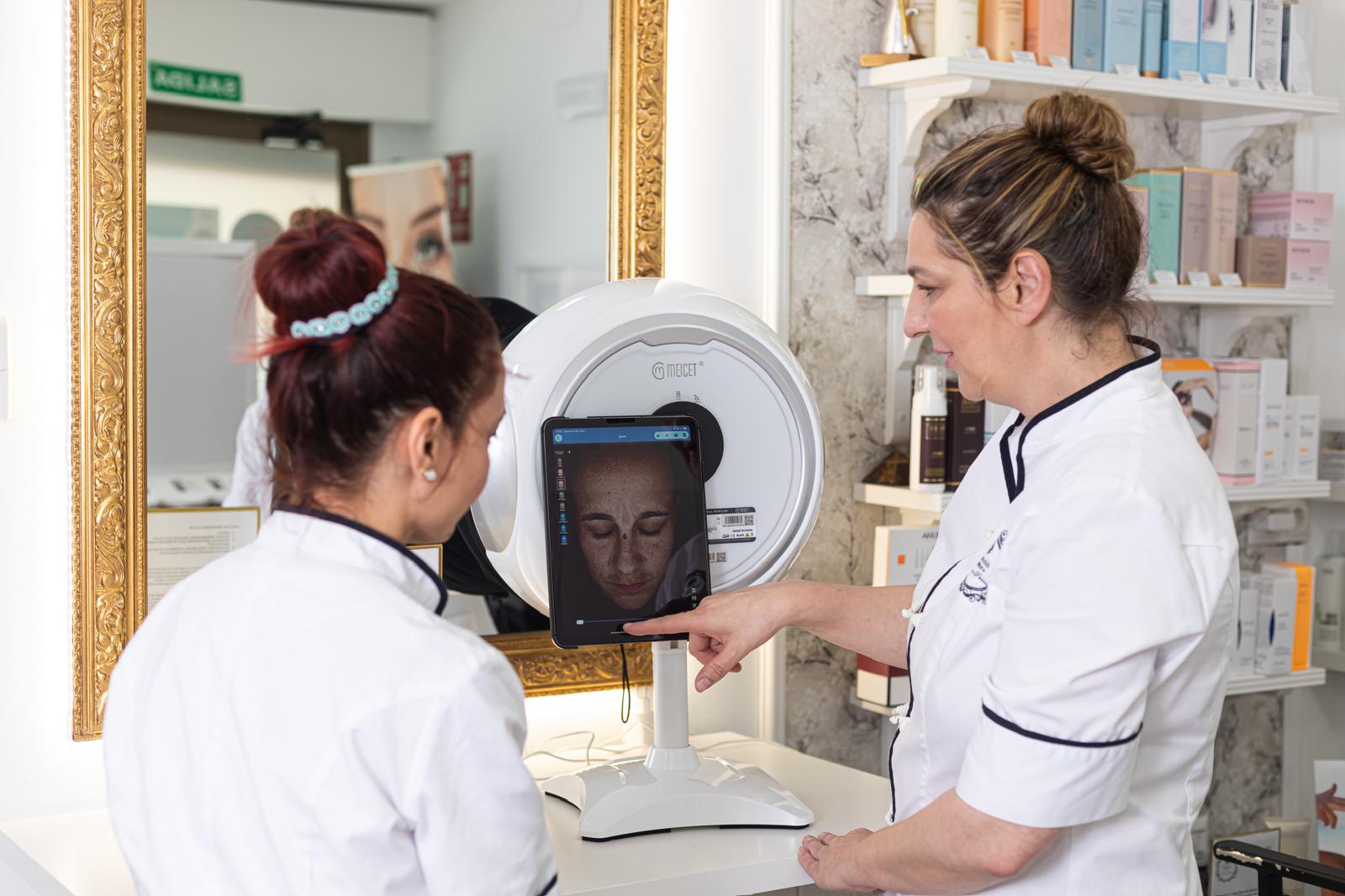
Cabin tip: if in the mirror you see dull, lustreless skin with uneven texture after summer, don't try to solve it with cosmetics alone. A facial diagnosis tells you exactly what your skin has (subdermal pigmentation, real dehydration, elasticity, sun damage) and stops you buying products you don't need. The MEICET diagnosis takes 20 minutes and saves you money on cosmetics.
When coming to the cabin is more useful than another product
Home cosmetics have a ceiling. If these are your issues, creams alone won't solve them:
- Post-summer dark spots - a professional peel or laser resolves it in 3-5 sessions.
- Uneven texture, dilated pores - Dermapen + mesotherapy, or FHOS activated carbon peel.
- Laxity, lost facial oval - HIFU 8D.
- Rosacea, couperose - specific protocols with athermal FHOS light, zero heat.
- Chronically dull skin - facial Kobido + FHOS + reinforced routine.
Also check the autumn facials guide to see which treatment fits your case.
Frequently asked questions
Should I use SPF if I don't go outside? Yes, if there's natural light in your home/office or you work near windows. UVA radiation passes through glass.
Can retinol and vitamin C be mixed? Yes, but better separated: vitamin C in the morning, retinol at night.
Do I change cream between summer and winter or use the same one? It depends on the skin. Dry/normal skin notices the difference; oily skin usually keeps the same with a slight boost in specific areas.
What do I do if my skin feels really tight after the cold? Add a hyaluronic acid serum under the cream, and a ceramide-rich cream on top. And avoid very hot showers.
Is it worth doing in-cabin treatments or can cosmetics alone handle it? Cosmetics have a ceiling. For dark spots, laxity, deep texture issues or scarring, you need the cabin. For daily maintenance, the at-home routine is the essential part.
Before spending on cosmetics, measure what your skin needs. The MEICET diagnosis analyses subdermal pigmentation, pores, real hydration, elasticity and sun damage. In 20 min you walk out knowing what to buy (and what not to) and which treatment is worth it. Free informational assessment.