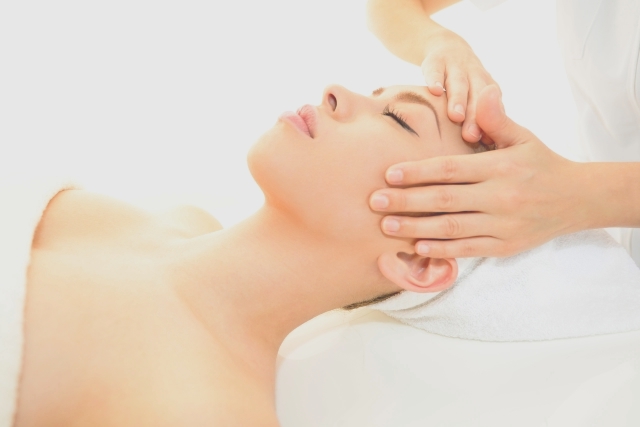
If you're looking for Kobido in Madrid, you've probably noticed the offer is enormous: from central Salamanca clinics charging €90 a session to bargain deals at €25 that promise the same treatment. The uncomfortable truth is that many of those "Kobido" sessions aren't really Kobido at all. This article is about how to tell the real thing from the rest, why the hands genuinely matter, and when it's worth travelling a little further — just 25 minutes from central Madrid to Campo Real — to find someone properly trained in the technique.
What Kobido actually is (not what the flyers say)
Kobido is a 150-year-old Japanese facial massage whose name means "the ancient way of beauty". Originally it was a technique reserved for Japanese empresses, and mastering it fully takes years of specialised training.
Technically, it's a deep manual massage that works on the facial muscles, connective tissue and the face's energy points through a very specific sequence of manoeuvres: tapping, kneading, pinching and rapid movements alternating with slower, deep-pressure ones. The rhythm and sequence can't be improvised.
What makes Kobido special isn't a device, a cream or a product. It's the technique of the hands. And that's why the gap between a well-done session and a badly done one is huge: in the first, you leave decongested, naturally lifted and relaxed; in the second, you leave with cream applied and not much else.
The tell-tale sign of a real Kobido: at the end you should feel your face visibly different — more decongested, firmer, features gently "lifted" — and the sensation in your facial muscles should be like the one a good body massage leaves in your shoulders: worked, relaxed, alive.
Why there's so much Kobido that isn't Kobido
The Kobido boom in Madrid has been enormous since 2020. So many clients ask for it that many salons have added it to their menu without their staff having any real training in the technique. The problem is that a standard facial massage badged as "Kobido" doesn't produce the same results.
Here are the most common warning signs:
- Sessions of 30 minutes or less. A full Kobido takes 50–75 minutes. The original sequence doesn't fit into half an hour.
- A protocol identical to any other facial massage on the menu. If they offer "Kobido" at the same price and length as their standard facial massage, it's probably the same thing rebadged.
- Odd combinations. "Kobido with radiofrequency" or "Kobido with a deep cleanse in 45 minutes" aren't real Kobido — the treatment needs its own dedicated time to unfold.
- No visible training. Ask where the therapist trained. A serious Kobido requires specific study with recognised masters, not a weekend course.
Where to look for Kobido in Madrid: the real map of options
If you live in central Madrid, you'll basically find three types of place offering Kobido. Each has pros and cons:
The third category is the one that tends to surprise people. Many clients who come to Esencia Estética from central Madrid do so because, after trying options in the city, they discovered the difference isn't in the venue — it's in the hands. A properly trained therapist in Campo Real gives them the same result as one in Salamanca — or better — twice as far but at a much more reasonable price.

The seven real benefits of Kobido done properly
When Kobido is properly performed, these are the changes that appear after 4–6 sessions (not the first, though you already notice something):
There's a seventh benefit that rarely gets mentioned but which I see in clients coming for the first time after years of stress: Kobido gives them back their expression. When we've been tense for a long time, the face loses mobility and freezes into a rigid expression. Kobido brings it back to life. It's hard to explain until you feel it.
What a Kobido session at Esencia Estética looks like
So you know exactly what to expect, this is the protocol I follow in every session. No part gets skipped — which is why the session takes its full 60–75 minutes, not 30.
How many sessions you need, and how often
This is the question I get most. And the honest answer depends on what you're after:
- If you want a one-off effect (wedding, event, important photo): one session 2–3 days before the event. Visible from day one.
- If you want visible, sustained change: an initial cycle of 6 sessions, one a week. From the third, changes are clear and noticed by others. After that, maintenance with one session every 3–4 weeks.
- If you're after long-term anti-ageing prevention: one session a month, sustained. Facial connective tissue responds to regular stimulus, not sporadic ones.
What I do NOT recommend is doing a single Kobido and expecting your skin to change for months. Like any training (because it is, literally, facial gymnastics), it needs continuity. A client who comes once a month for a year sees far more results than one who does six sessions back-to-back and disappears.
Why coming from central Madrid is worth it
I'm not going to oversell it: if you live in central Madrid, there are excellent places closer to home. But there are four concrete reasons why clients from Retiro, Moratalaz, Vicálvaro or even Salamanca come out to Campo Real:
First: the price. A real 70-minute Kobido in central Madrid can cost between €95 and €130. Here it sits in a significantly lower range.
Second: the atmosphere. Campo Real is a village, the centre is on a ground floor with a garden, and there's no urban noise. The disconnection is very different from walking out of a session straight into Príncipe de Vergara traffic.
Third: I always look after you personally. You won't turn up to find that the therapist you saw first time isn't here any more, or that today someone else is covering. Sounds trivial until it happens to you.
Fourth: unhurried sessions. There's no packed diary behind you. If your skin needs five more minutes of drainage, you get them.
How to reach Esencia Estética from Madrid
We're at Carretera de Velilla, 6, Campo Real. Depending on where in Madrid you're coming from, journey times are roughly:
- From central Madrid (Atocha, Retiro): 30–35 minutes on the A-3 towards Valencia, exit 22 for Arganda and then the M-300.
- From Vallecas, Moratalaz, Vicálvaro: 25–30 minutes on the same route.
- From Rivas Vaciamadrid: 15 minutes on the M-300.
- From Coslada or San Fernando: 20–25 minutes on the R-3 or the A-2 and M-206.
Free parking, no controlled-parking zone, right outside the door. No circling for a spot like in the city centre.
with time and properly trained hands?
If you've been searching for a good Kobido in Madrid and want to try something different, send me a WhatsApp and we'll book your first session. If you're coming from central Madrid or the surrounding area for the first time, we have a special introductory price. Tell me what you're looking for in your skin and we'll sort out a slot.