Kobido · Campo Real, Madrid
Japanese Kobido near Madrid: the natural facelift done properly
Over 30 manoeuvres from a 500-year-old Japanese technique, delivered across 60-75 minutes with no needles, no machines and no shortcuts. Tones the facial muscles, drains, oxygenates and produces a natural lifting effect visible from your very first session. At Esencia Estética in Campo Real — just 25 minutes from central Madrid.
What is Kobido
The Japanese art of the face, applied in the treatment room
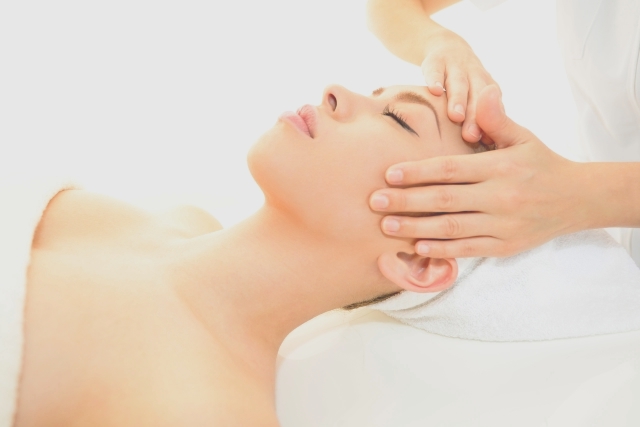
Kobido was born in Japan in 1472 and was refined over centuries as a technique reserved for royalty. Its name literally means "the ancient way of beauty". Unlike a generic facial massage, Kobido follows a precise sequence of manoeuvres with a studied order, rhythm and depth.
It works on three planes: the facial muscles (toning), blood circulation (oxygenation, radiance) and the lymphatic system (drainage, decongestion). What makes it extraordinary is that it produces a visible lifting effect using only hands and technique — no machines, no injectables.
That is why it requires specific training. A proper Kobido lasts as long as it needs to and is never rushed. That is the biggest difference from the many "Kobido massages" offered on the market.
What a session looks like
The 4 phases of an authentic Kobido
A complete session has a clear architecture. If you are offered "Kobido in 30 minutes", more than half of it is missing. This is the real structure:
Relaxation
Welcome manoeuvres that release tension held in the neck, jaw and forehead. This is what prepares the skin to respond to the rest of the work.
Drainage
We mobilise the lymphatic system of the face and neck. Reduces puffiness, decongests dark circles and leaves the face visibly sharper.
Muscle toning
Percussion, friction and "pinching" manoeuvres that activate the facial muscles. This is the phase that produces the natural lifting effect.
Closing
Acupressure on energy points and final relaxation manoeuvres. You leave feeling deeply rested, with skin that looks like it has "breathed".
What matters
How to tell a real Kobido from a mediocre one
It is worth saying: Kobido has become fashionable and many centres offer it without specific training. What is billed as "Kobido" can be anything from the authentic technique to a generic facial with a Japanese name on the sign. How to tell the difference:
Authentic Kobido
- 60-75 minute session
- Practitioner with specific certified training
- Over 30 different manoeuvres with rhythm and sequence
- Work across all 4 planes (relaxation / drainage / toning / closing)
- Visible results from the first session, plus maintenance plans
- No "miracle" cosmetics or cross-selling
What is NOT Kobido
- 20-30 minute sessions at an "attractive" price
- Practitioner without specific Japanese training
- Generic manoeuvres (drainage and little else)
- Only 1-2 phases, no clear structure
- Barely perceptible results after the session
- Sales pitch for long packs before you have even tried it
"Kobido is not to be rushed and its steps are not to be skipped. When it is done properly, you leave the centre with a different face — literally."
Testimonials
What our clients say
"I tried Kobido somewhere else first and it felt like an ordinary massage. Here I finally understood what real Kobido is. I left with a sharper jawline and radiant skin."
"I come every 3 weeks. It is my facial maintenance without ever touching botox. Carmen is an artist with her hands."
"75 minutes that fly by. There are manoeuvres that feel like a full facial reset. The difference is still there days later."
Frequently asked questions about Kobido
What exactly is Kobido? +
Kobido is a Japanese facial massage technique with more than 500 years of history. It combines over 30 different manoeuvres (acupressure, percussion, friction, drainage and stretching) to tone the facial muscles, boost circulation and produce a natural lifting effect with no needles and no machines.
How long is a Kobido session? +
A real Kobido session lasts between 60 and 75 minutes. If you are offered a 30-minute "Kobido", that is not a full Kobido — it is a short facial massage. The authentic technique needs time because it works in layers: relaxation, drainage, muscle toning and closing.
When will I see results? +
From the very first session: the skin looks brighter, the face looks rested and the jawline better defined. The immediate effect lasts 4-7 days. For long-term results you need 4 to 8 sessions, 1-2 weeks apart, plus monthly maintenance.
Which ages is it suitable for? +
It is very versatile. On young skin (25-35) it works as prevention and maintenance. On mature skin (40+) it targets early sagging, tones and improves oxygenation. Intensity and manoeuvres are adapted to age and skin condition.
Can I combine Kobido with HIFU or other treatments? +
Yes, and it works beautifully. HIFU works on the deep layers (structure) while Kobido works on the superficial layers (muscle tone and oxygenation). They are complementary. It also combines well with radiofrequency and mesotherapy. If you follow a joint plan, we space them out correctly.
Are there any contraindications? +
Very few, and they are the usual ones: active skin lesions in the area, infections (cold sores, dermatitis), highly reactive rosacea (we adapt intensity), recent facial surgery. There is no contraindication during pregnancy and it is very safe overall.
How much does Kobido cost in Campo Real? +
Set prices for single sessions or multi-session packs (packs bring the per-session price down). We share prices freely on WhatsApp, no obligation, or during the first consultation which is free.
Book your Kobido session
A plan adapted to your age and your goals. No invasive products, no sales pressure — just quality hands-on work.
Discover also our HIFU facial (the complementary technique to Kobido for advanced sagging), our facial treatments in Campo Real, our dark-spot and pigmentation treatment, or read our blog articles: Kobido: the Japanese facial massage and Kobido near Madrid: why come to Campo Real. We look after clients from Campo Real, Arganda del Rey, Rivas Vaciamadrid, Eurovillas and Nuevo Baztán.