There are two ways to understand an aesthetician's work: as a trade you learn once and repeat for 30 years, or as a scientific profession where something important changes every year. The difference between those two approaches shows up in the results that sit in your chair. In this article I want to tell you, without a filter, what "being up-to-date" in aesthetics really means — and why continuous training is the line that separates a good salon from a mediocre one. Written from Campo Real, 25 minutes from central Madrid.
Aesthetics moves very fast: what was standard 5 years ago is now obsolete
When I started over 15 years ago, the in-treatment-room protocols and the cosmetics we used in aesthetics were very different from today's. In the last decade, the industry has undergone a transformation few professionals outside the treatment room ever see:
- Aesthetic machinery has moved from mechanical devices to technologies like HIFU, multipolar radiofrequency, focused ultrasound, muscle electrostimulation (Sculp Body) and LED photoluminic therapy.
- Professional skincare has incorporated actives that didn't exist: biomimetic polypeptides, tranexamic acid, stable-formulation niacinamide, skin probiotics, and penetration vehicles such as liposomes and nanoencapsulation.
- Knowledge of the skin microbiome, cellular longevity and the biological markers of ageing has completely changed how facial treatments are designed.
- In-room protocols are no longer fixed recipes: they're personalised plans that adjust to phototype, hormonal history, lifestyle and the specific goal.
If a beauty salon is still working the way it did in 2015, it's not out of conviction. It's because they haven't trained. And that's paid for by the skin of whoever sits in their chair.
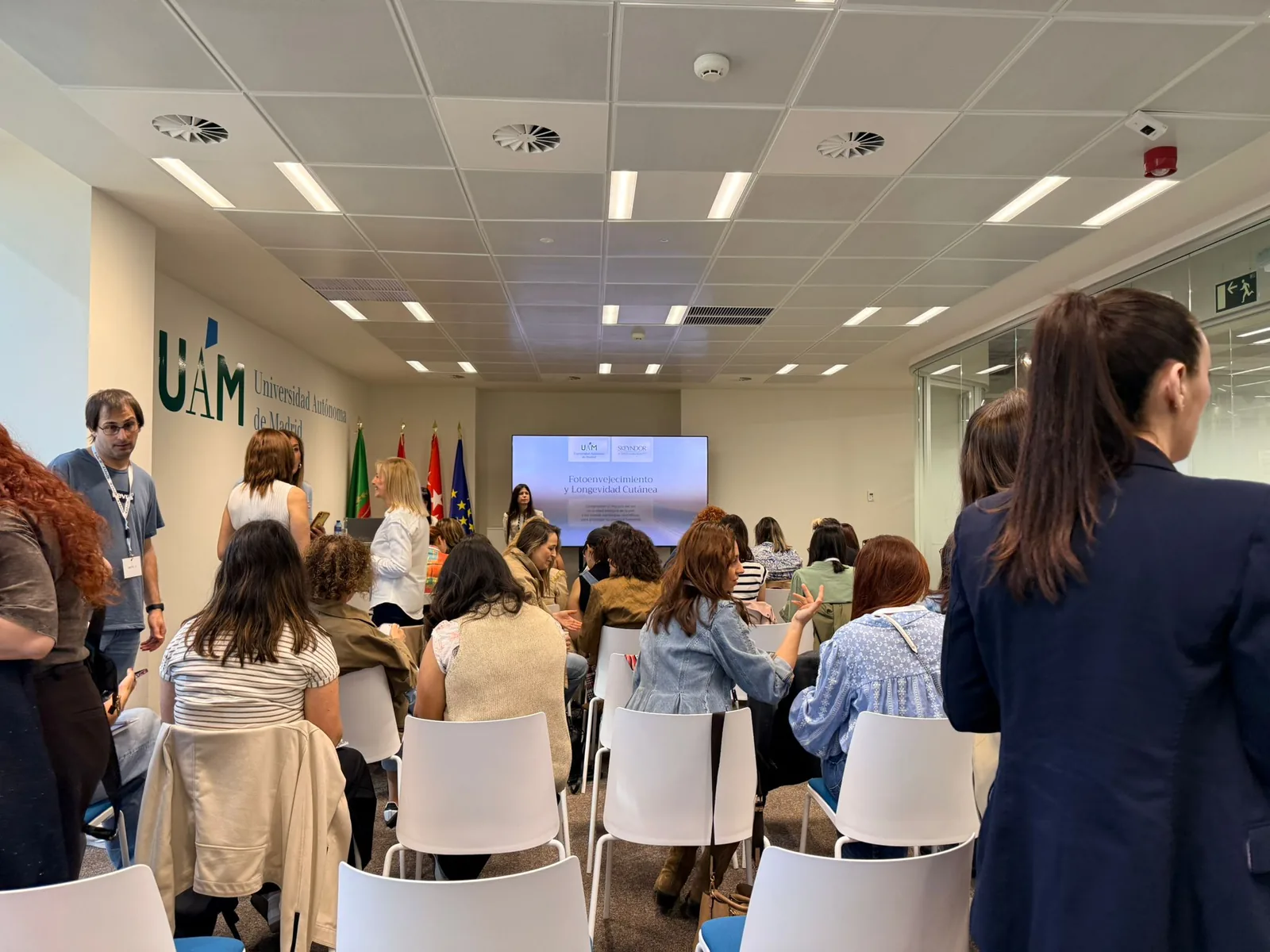
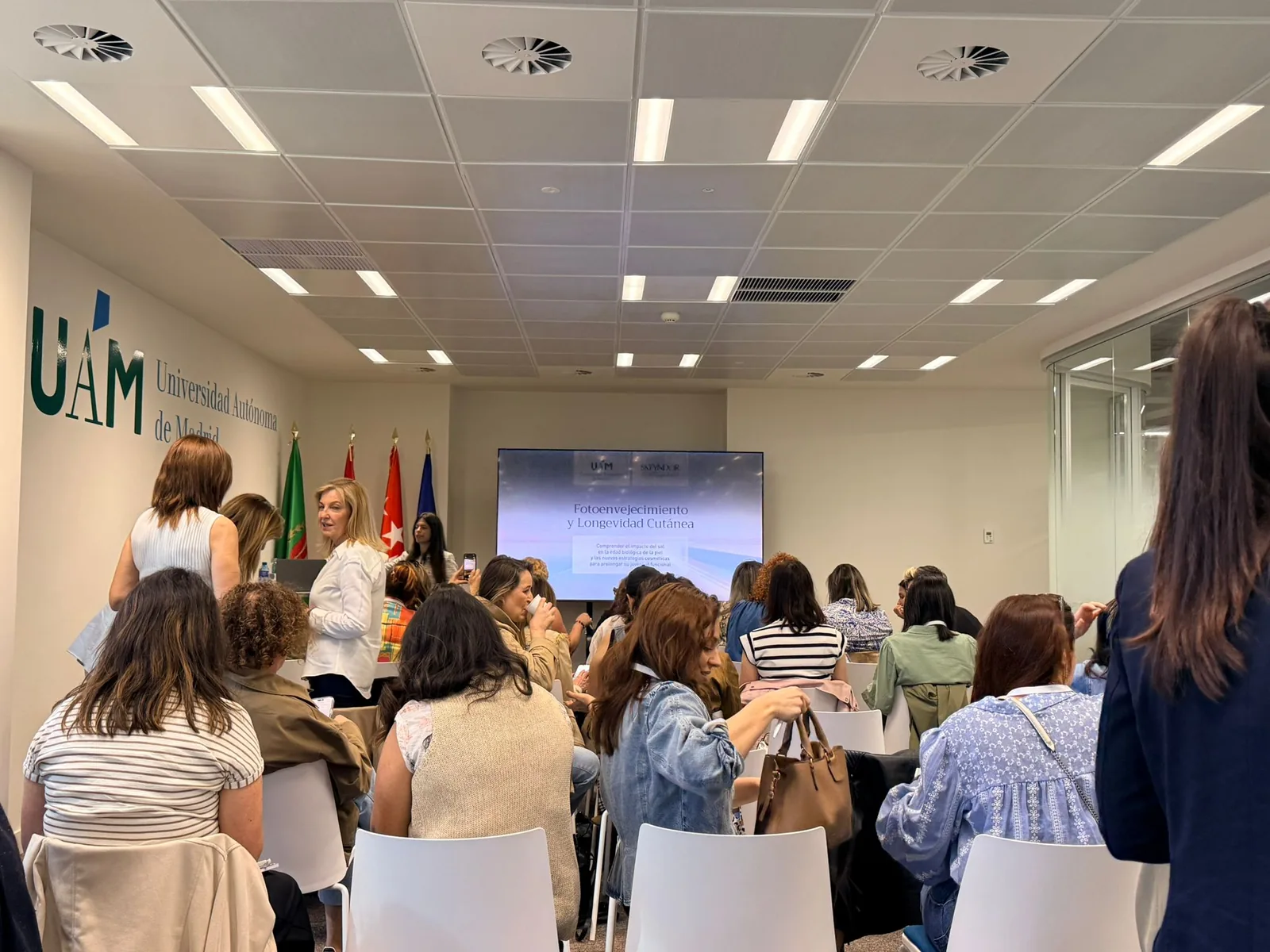 UAM–Skeyndor course "Photoageing and Skin Longevity", April 2026 — UAM Campus 280, Madrid.
What "being up-to-date" in aesthetics really means
It's not going to a trade fair once a year. It's not watching a YouTube video. Being up-to-date means sustained work across several layers:
1. University-level training
In recent years, the major professional cosmetics brands have started collaborating with universities to deliver formal scientific training. I regularly attend the courses that Skeyndor runs at the Universidad Autónoma de Madrid (UAM Campus 280), where each year's advances are worked through from a biomedical angle. It's not marketing: it's sessions with data, papers and university classrooms.
2. Technical master classes with brands
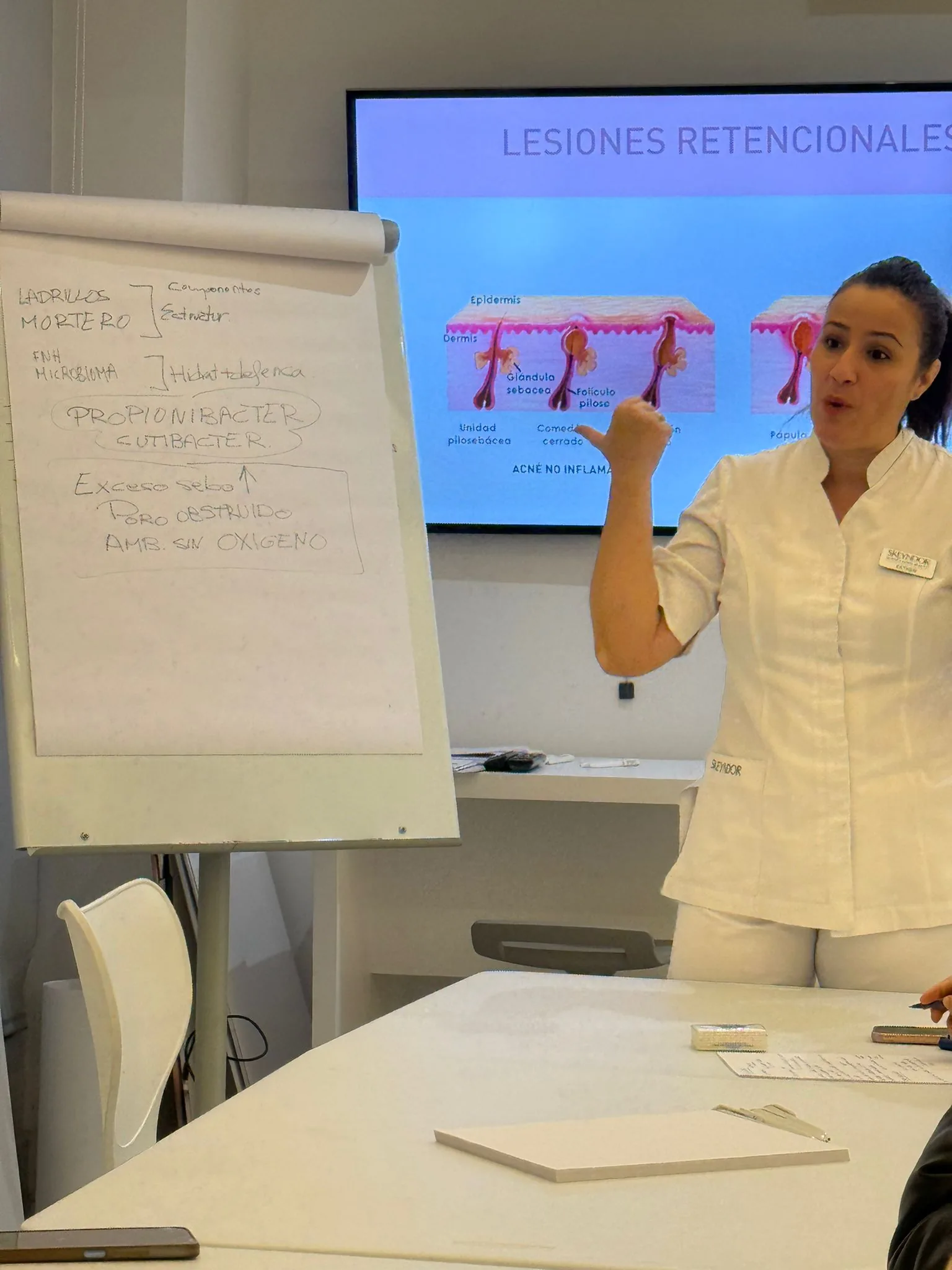
Skeyndor, PostQuam, Alissi Brontë, Phytobase, Nueva Visión, Skinderma and other brands I work with organise deep technical sessions several times a year. Small groups (10–20 aestheticians) with specialist trainers. You learn the new range, the actives, the in-room protocols and the real contraindications, and there's almost always live practice with a model.
3. Industry congresses
Congresses on machinery, dermocosmetics and medical aesthetics are where you see what's coming in the next few years. Attending means coming back with the criteria to decide which technology to bring into the salon and which to leave, and why.
4. Continuous reading and updating
Technical journals, cosmetics papers, protocol updates, debates in the professional community. It's the least visible part but the one that provides the underlying judgement.
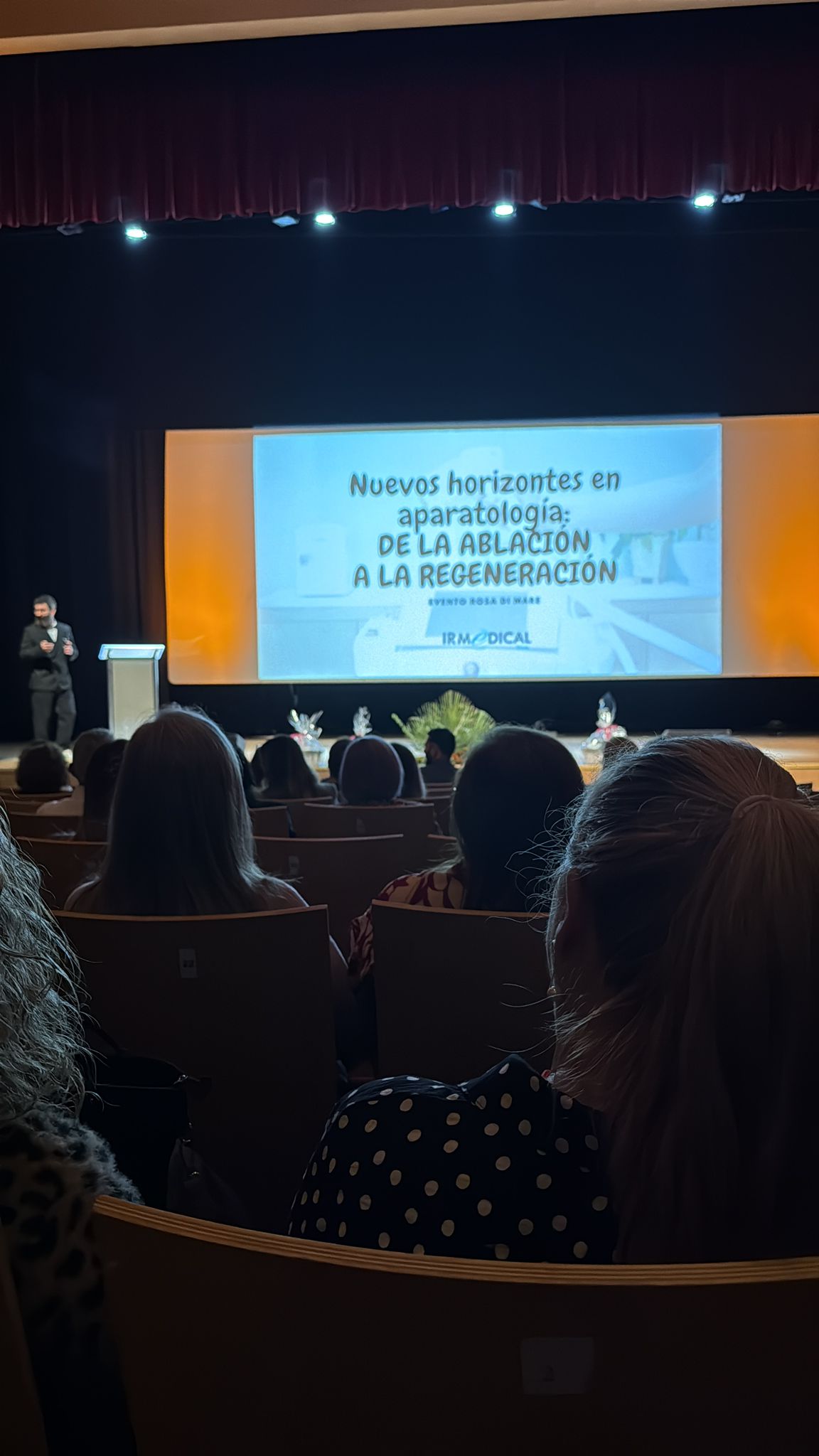
My credentials from the last few months
Talking in the abstract is fine, but being specific is better. Here is some of what I've done recently — so you can see these aren't just words:
How this translates into your treatment room
A client shouldn't have to understand what a skin probiotic is or how HIFU works to notice the difference between a well-trained salon and one that isn't. The difference can be seen, felt and sustained. This is what changes when the professional is up-to-date:
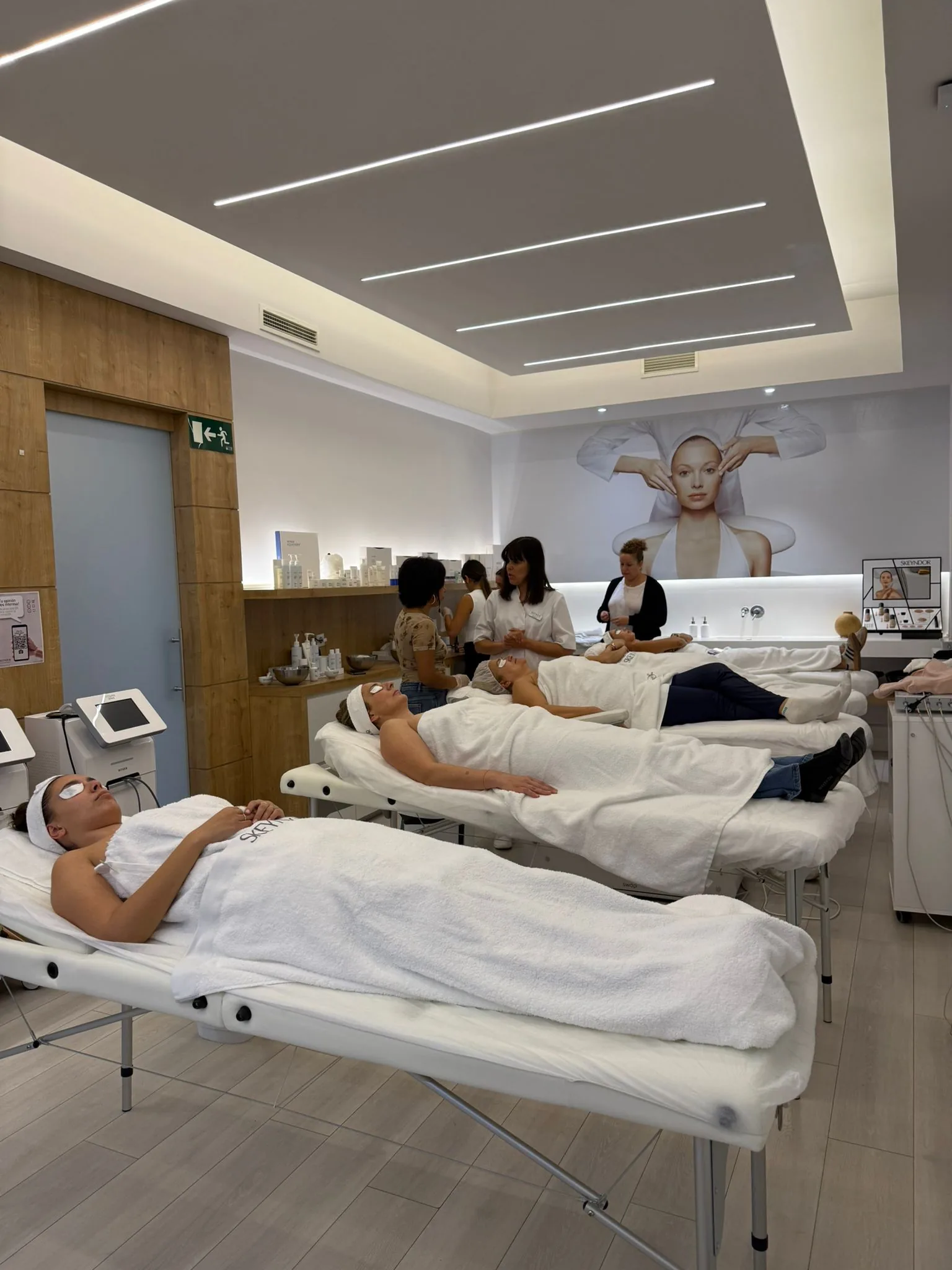 Live in-room practice as part of continuous training — Skeyndor 2026.
The personal-growth factor: why it still matters to me
Let's talk about something people don't usually say in aesthetics blogs. Training costs time, money and energy. When you've been in the industry for over 15 years, the easy option is to say "I already know what I need to know". And yet, I still do courses and congresses every year. Why?
Because aesthetics moves faster than my own experience. Walking into the treatment room with curiosity, with questions, with the eagerness to try a new active or a protocol I hadn't seen before — that's what keeps the work alive. Without that personal-growth side, the trade turns into repetition, and the client notices. She notices in how she's treated, in how she's spoken to, in whether she's offered something new or always the same thing.
Continuous professional training isn't just technical. It's professional ethics. It's saying to the client: "what I'm applying to you today is the best I know how to do right now, and in six months I might know how to do something better still".
An honest question to ask your beauty salon: "What was your last training course?" If the professional can answer with date, speaker and syllabus in 5 seconds, you're in good hands. If she takes time to answer or changes the subject, that's information in itself.
The rewarding part: what happens when it works
Running a small salon and constantly training yourself has a return you measure in another currency: the satisfaction of clients who maintain a years-long relationship with Esencia Estética.
When a client comes back and says "my skin is better now than it was 5 years ago, and I'm 5 years older", it's because something has been done well and consistently. When someone from Arganda del Rey, Rivas Vaciamadrid or Nuevo Baztán drives 15–25 minutes to Campo Real because they can't find that kind of care somewhere closer, it's because the difference shows. When a client brings her 16-year-old daughter for a first protocol and her 65-year-old mother for maintenance, that's what makes it worth continuing to train.
My commitment to you
If you come to Esencia Estética, there's an implicit commitment: I keep training, and you trust that what happens in the treatment room is up-to-date. The part of my work you don't see — the classroom hours, the trips into Madrid for the UAM courses, the weekend master classes — is the foundation of the part you do see: skin that improves, an honest plan, and a relationship built on trust.
These courses aren't a certificate on the wall for marketing. They're the raw material of the daily work. And the raw material sets the ceiling.
how we work?
Book a free personalised consultation. We'll analyse your skin, talk about your real goals and design a plan that makes sense. No selling you a treatment you don't need. English-speaking service, 25 minutes from central Madrid.