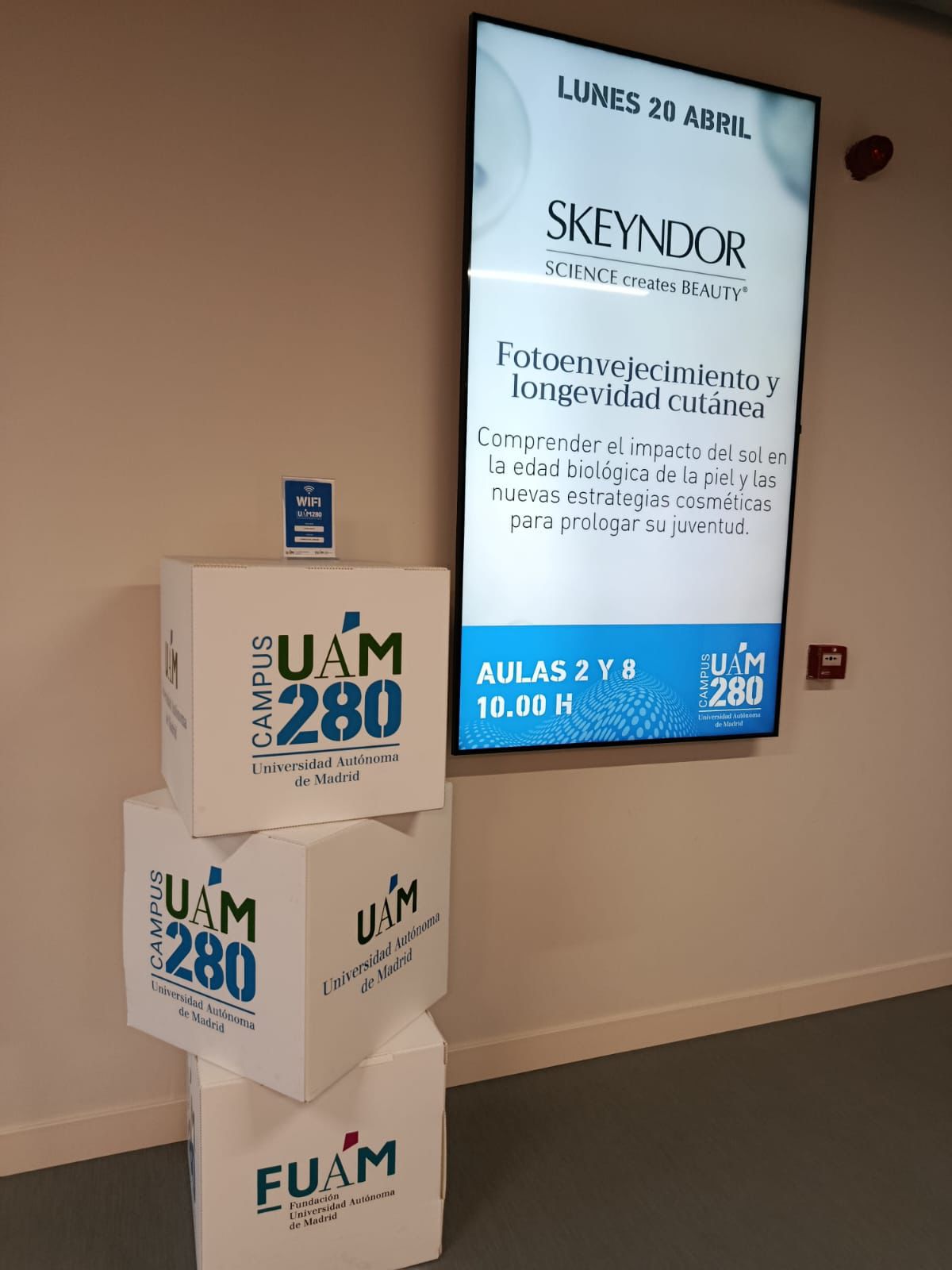
Fifteen years ago the border between "cosmetics" and "medicine" was clear: cosmetic was superficial, medical was deep. Today that border has blurred, in the best possible way. Modern dermocosmetics is born in university laboratories and validated with clinical studies before reaching the treatment room. It's no longer marketing: it's science. And that changes everything about what is applied to your skin. In this piece, from our salon 25 minutes from central Madrid, I want to share what's actually happening behind the products.
From "pretty creams" to cosmetics with proven efficacy
Twentieth-century cosmetics were based on formulas that smelled good, felt pleasant and, with luck, moisturised. Their effect was mostly sensory. In the last decade, all of that has changed for one specific reason: the emergence of dermocosmetics as an intermediate category between traditional cosmetics and medicines.
Dermocosmetics stands apart on three key points:
- Actives at effective concentrations, not token amounts. The difference between whether a niacinamide works or not is the concentration (5–10%) and the pH. Dermocosmetics is formulated with biomedical criteria, not marketing criteria.
- Advanced penetration vehicles: liposomes, nano-encapsulation, transporter peptides. This is what allows an active to reach the layer where it must work, rather than sitting on the surface.
- Scientific validation: in vitro and in vivo studies, clinical trials. Dermocosmetics brands publish results, not claims.
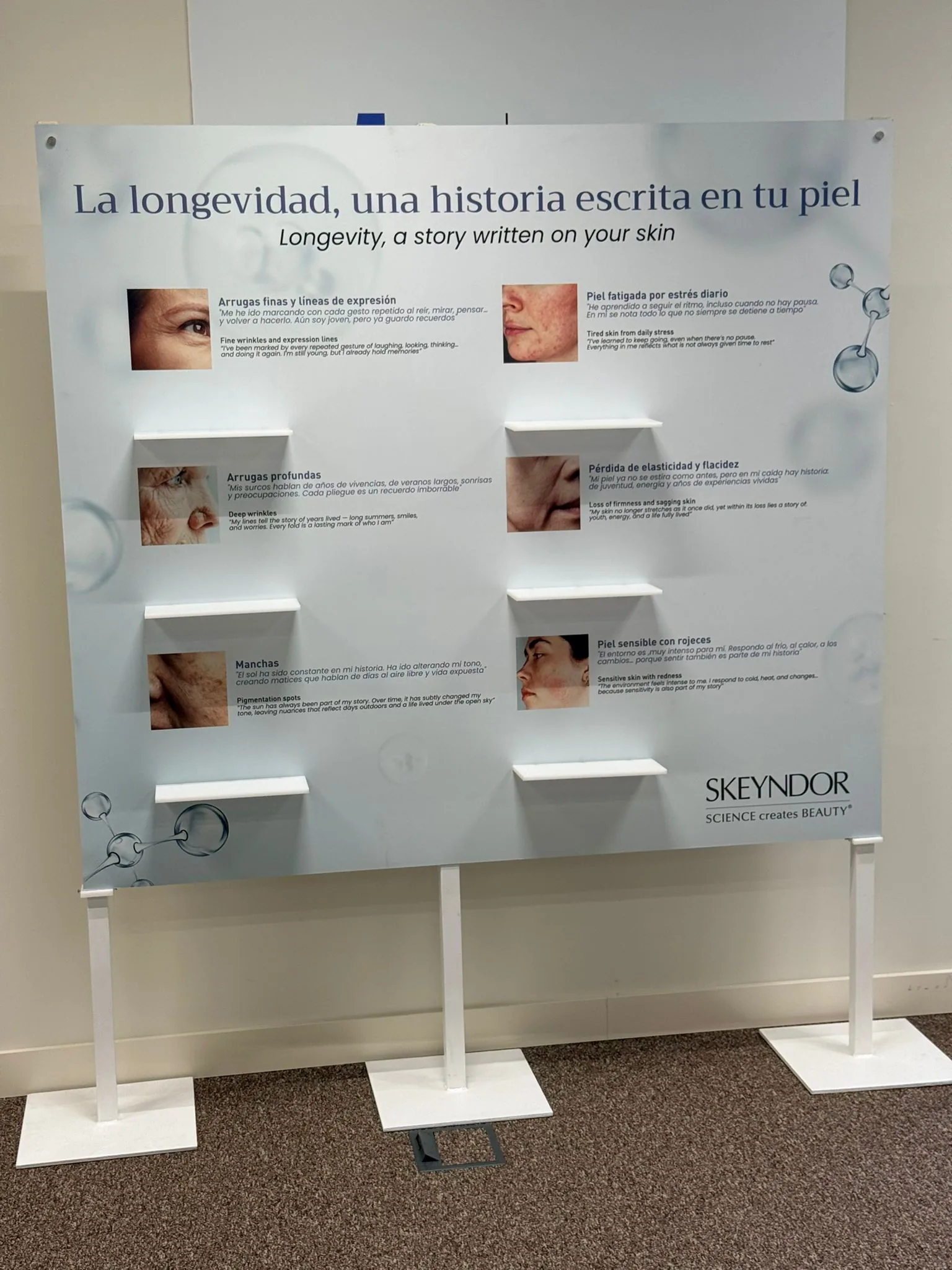 Skeyndor educational panel at UAM: wrinkles, stress fatigue, loss of elasticity, dark spots and sensitivity — each sign linked to its own biomarker.
The university-laboratory partnership: what's changing
One of the most significant advances of recent years is the incorporation of the university as a scientific ally of the major dermocosmetics brands. This is not tokenistic. There are formal, in-depth partnerships:
A concrete, real example: Skeyndor maintains an academic partnership with the Universidad Autónoma de Madrid (Campus UAM 280, FUAM) that materialises in formal training for aesthetics professionals. There I attend sessions covering the scientific basis of new protocols, ageing biomarkers and the in vivo studies of the actives before they are launched. Professional cosmetics can no longer be understood without this scientific layer.
This kind of partnership means that what is applied in the treatment room has been through a research bench first. And you notice it in something very concrete: results are more predictable, protocols more personalised and contraindications more clearly defined.
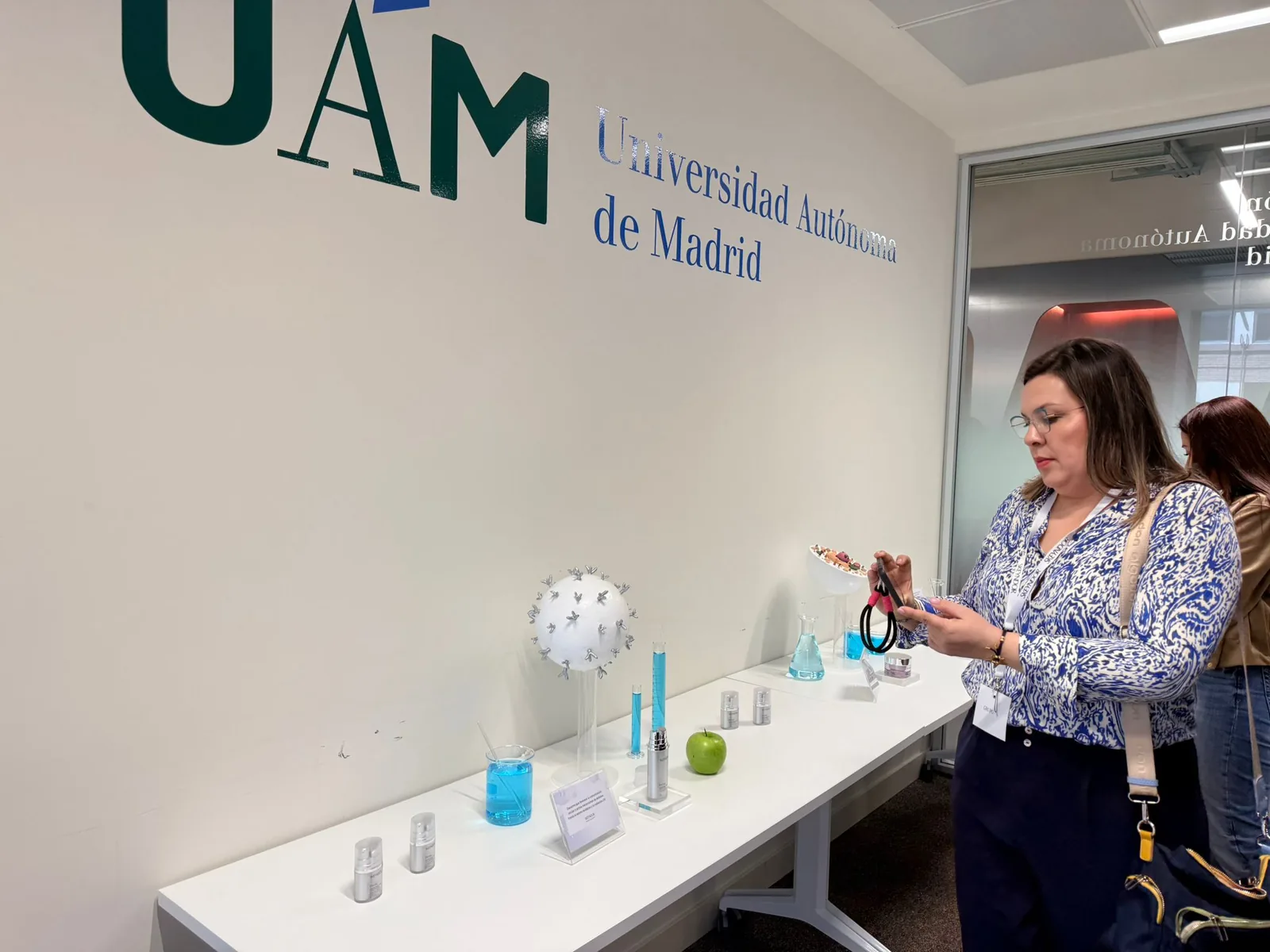 Exhibition table on the UAM campus: cosmetic samples sit alongside flasks, molecular models and product formulations — the visual language says it all.
The four pillars of today's dermocosmetics
Today, the advances that are transforming treatment-room work fall into four broad areas of research. These are what most move real results for clients:
Skin microbiome
The skin is home to billions of microorganisms that protect it. The new cosmetics respect and reinforce that ecosystem rather than "disinfecting" it. Probiotic and prebiotic actives for reactive, acne-prone or sensitive skin.
Cellular longevity
Beyond "anti-ageing": slowing the biological ageing of the cell itself. Actives that work on cellular senescence, mitochondria and telomeres. It's what Skeyndor is studying with UAM in its "Skin Longevity" programme.
Photo-ageing
80% of visible ageing comes from the sun. The new dermocosmetics understands the types of sun damage at DNA level and formulates specific repairing actives: photolyase enzymes, antioxidants at effective concentration, tranexamic acid.
Biomimetics and peptides
Actives that mimic structures native to the skin (native collagen peptides, elastin fragments, growth factors) so the body recognises and integrates them without rejection. It's the most active frontier today.
Skin microbiome: the acne case explained properly
Acne is the perfect example of the scientific leap in dermocosmetics. For decades it was treated with a single approach: kill the bacteria (propionibacterium acnes, now reclassified as cutibacterium acnes) with aggressive antibacterials.
Today we know that approach is wrong. Cutibacterium lives normally on healthy skin; it only becomes pathogenic when the follicle is blocked and creates an oxygen-free environment. The current strategy is no longer to eliminate it but to regulate the environment it lives in: control excess sebum, prevent pore blockage, keep the skin barrier healthy and balance the microbiome with probiotic actives.
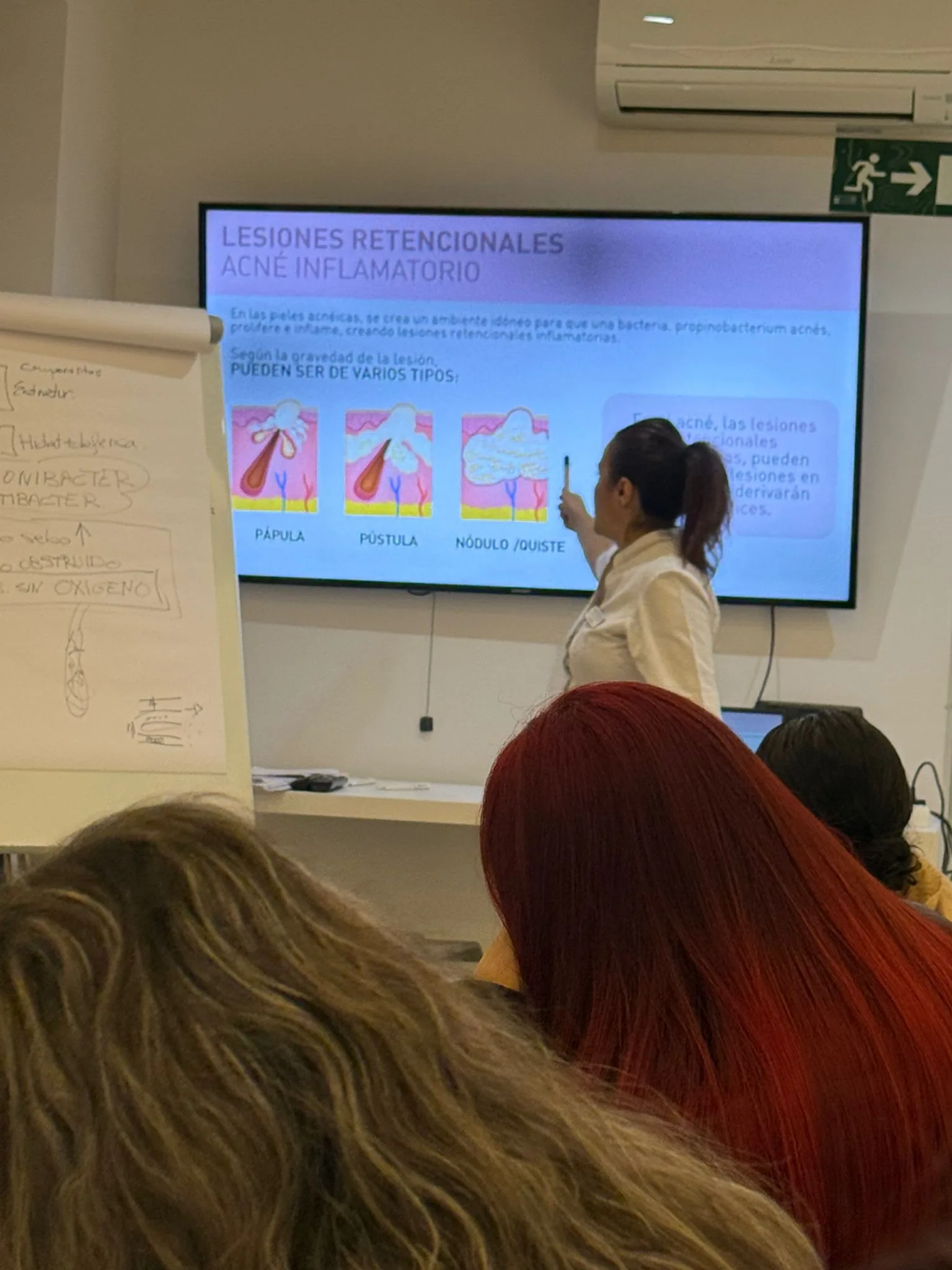 Technical training on retention lesions and inflammatory acne: the anatomical keys that guide every treatment-room protocol.
In the treatment room, this paradigm shift translates into protocols like the Probiome Peel by Skeyndor — a peel that renews the skin while respecting the microbiome, rather than wiping it out. This is the kind of advance that is only possible when cosmetics rests on genuine dermatological research.
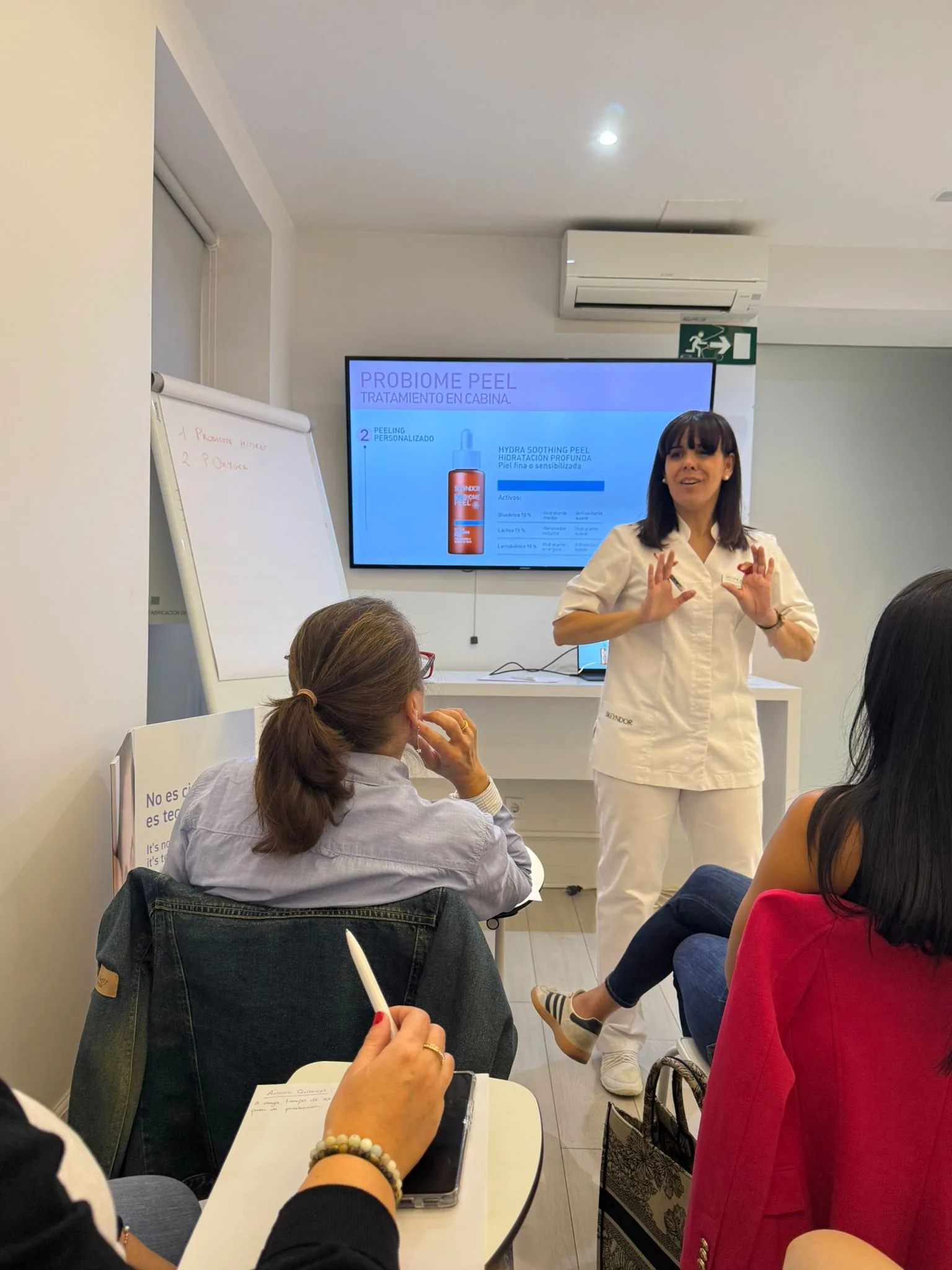 Master class on the Probiome Peel protocol: personalised peel that respects the skin microbiome.
How scientific advance travels from research to your face
The full journey of a dermocosmetic active, from the laboratory to your treatment room, follows a sequence most clients never see. This is what happens between one thing and the next:
Research
University / laboratory. In vitro and in vivo studies. Identifying the biological target.
Formulation
The cosmetics laboratory encapsulates and stabilises the active at effective concentration and pH.
Treatment room
The aesthetician, trained in that protocol, applies it with judgement on your specific skin.
When a client asks "how does this work?", the honest answer is not "because it moisturises". It's: "because this peptide encapsulated in a liposome penetrates down to deep dermis, binds to the fibroblast receptor and stimulates the synthesis of type I and III collagen over the next 4–6 weeks". That is the difference between cosmetics and dermocosmetics.
The scientific actives that are shaping the sector right now
If you'd like to understand what you'll be reading on professional cosmetic labels over the coming years, these are the names that will be everywhere:
The evolution in aesthetic technology: from ablative laser to regeneration
In parallel with dermocosmetics, aesthetic devices have gone through their own revolution. The recent congress I attended put it perfectly: "New horizons in aesthetic technology: from ablation to regeneration". That phrase is the best summary of the shift.
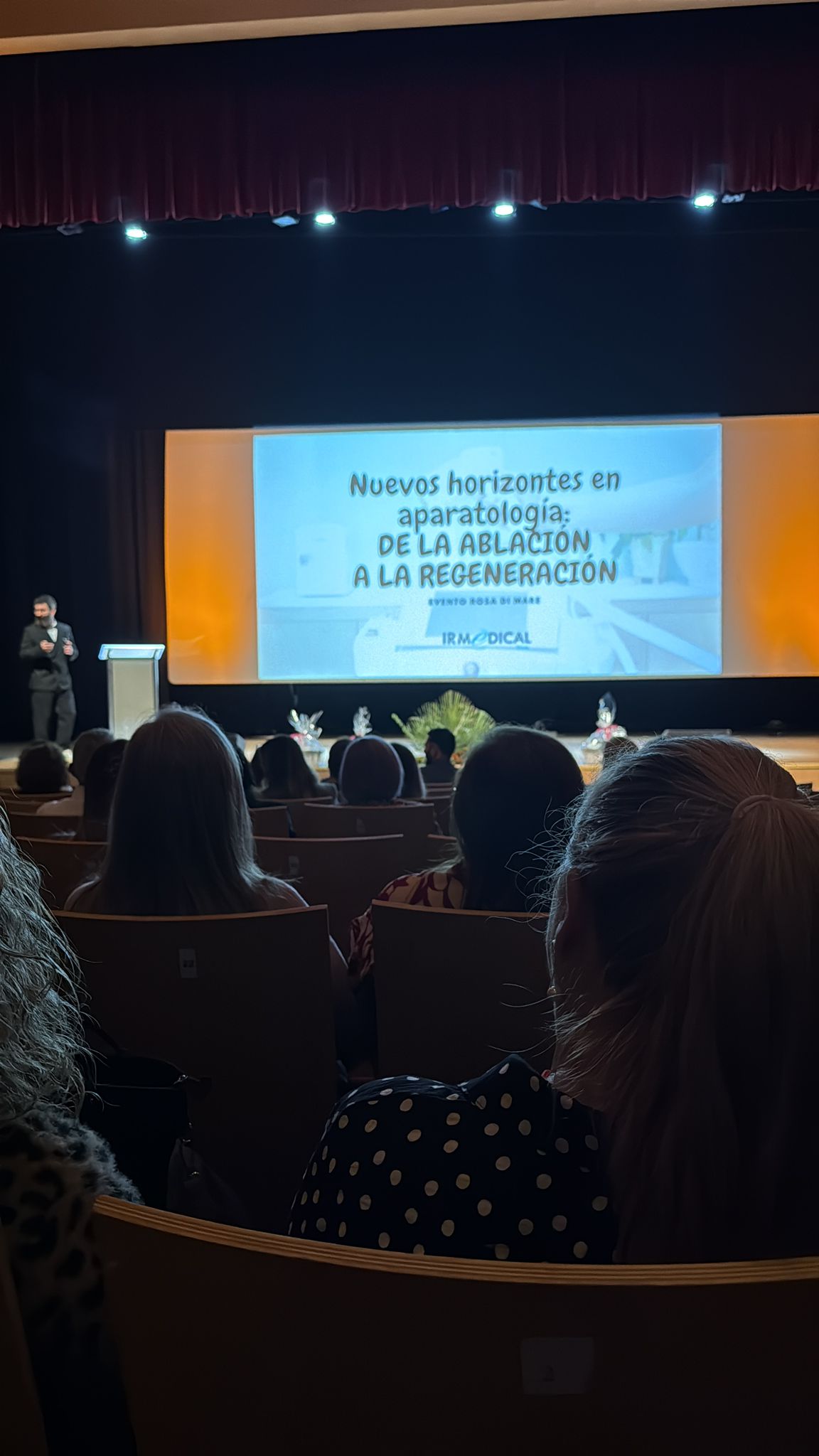 IR Medical Congress 2026: the paradigm shift in aesthetic technology, from ablation to regeneration.
What all of this means in the treatment room
All of this science translates, in day-to-day work, into three very concrete things the client notices:
- Treatments that are more comfortable, with less downtime. A probiotic peel doesn't burn; HIFU has no recovery time; LED therapy doesn't irritate. Intensity now comes from the active or from the technology, not from aggression.
- Results that last longer. When you stimulate a native biological process (more collagen, balanced microbiome, reinforced barrier), the result holds even when the client doesn't come in every week.
- A truly personalised plan. With today's information on phototype, skin type, hormones, microbiome and lifestyle, there is no longer a "flagship treatment": there's a treatment for you.
My responsibility as a professional
Attending the university courses, reading the papers the brands publish, understanding what each active does at each layer of the skin — none of this is optional when you work with serious dermocosmetics. It is the minimum condition for applying it responsibly.
At Esencia Estética we work with brands that invest in research (Skeyndor, Phytobase, Alissi Brontè, PostQuam) precisely because they respect the scientific logic of the product: effective concentration, validated vehicles, in vivo studies. We do not work with brands built only on fragrance and packaging.
For my part, I keep training every year at UAM, in technical master classes and at industry congresses. I wrote about the importance of continuous training here. Because without that constant updating, everything I've written here would be dead weight: I'd have the products, but I wouldn't know what to do with them.
that's really tailored to you?
Book a consultation. We'll analyse your skin, talk about which actives and treatments actually make sense for you, and design an honest plan based on what we know today — not on what was done ten years ago. 25 minutes from central Madrid.