Wood therapy has gone from being an almost unknown technique 10 years ago to one of the most in-demand body treatments in Spain. It works with wooden instruments moulded specifically for each area of the body, with a special quality: it combines the ancestral (the technique comes from Colombia's Caribbean coast) with measurable, verifiable results. From our salon 25 minutes from central Madrid, here's what it is, what it's for, and why more and more clients are folding it into their body plans.
What is wood therapy?
Wood therapy (maderoterapia) is a manual technique that uses natural wooden instruments (usually beech, bamboo or fir) in different shapes to perform a deep massage on various areas of the body. Each tool is designed for a specific job: some drain, some reduce, some sculpt, some tone.
The technique was developed and popularised in Colombia by therapist Cristina Rocha in the 1990s, though its roots lie in traditional indigenous Caribbean massage. It landed in Spain around 2015 and has been gaining ground since, especially in advanced beauty salons.
It's not just massage with sticks: the instruments are designed to apply pressure at very specific depths and areas. Each has its use: the "cup" is used on concave areas like the buttocks, the "roller" on legs, the "mushroom" on localised spots, the "cubes" on the abdomen. Without knowing the specific use of each one, the technique doesn't work.
What it really does
Wood therapy acts on several tissues at the same time, which is what makes it so versatile. These are its demonstrated effects:
Why some say it's "replacing" mesotherapy
Many clients who used to have body mesotherapy with a needle are switching to wood therapy for several concrete reasons. It's not that mesotherapy has stopped working — it's still a valid, effective treatment — but wood therapy has real advantages for many cases:
That said, there are cases where mesotherapy remains the better option (very specific cellulite, deep loss of firmness, certain stubborn fat pockets). A good professional will tell you which is best in your specific case.
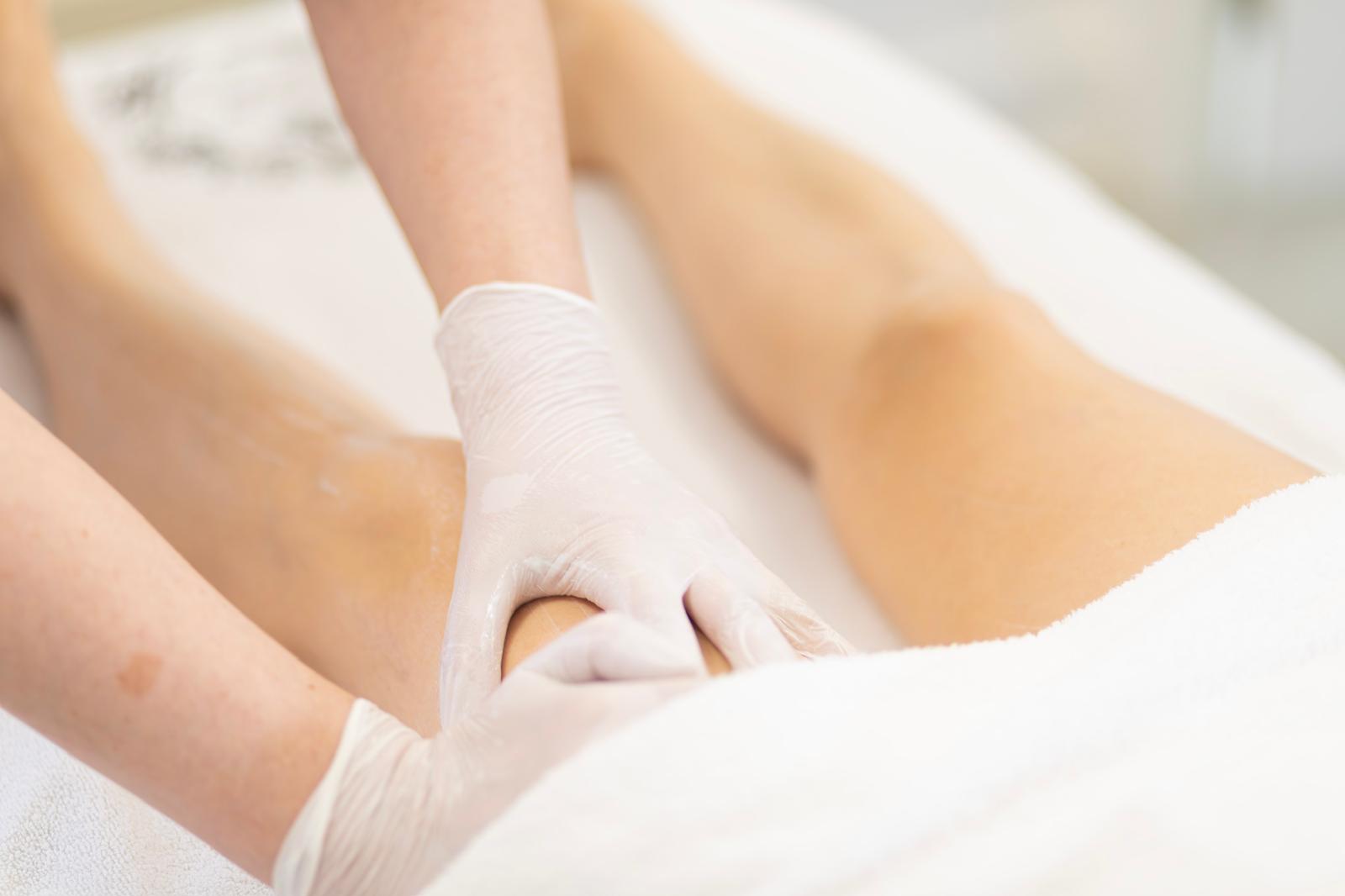
The areas where it works best
Wood therapy can be applied on almost the whole body, but there are zones where its results are especially strong:
Thighs and glutes
Where it shines the most. The combination of cellulite + localised fat + need for sculpting finds a perfect ally in wood therapy. It's the area where most clients see visible change from the first 3–4 sessions.
Abdomen and flanks
Very effective for reducing volume, working on the "muffin top" and sculpting the waist. Combines well with pressotherapy and cold wraps in the same protocol.
Arms
For the typical laxity on the inner arm that tends to appear after 40 or after weight loss. Wood therapy revives the tonicity of skin and underlying tissue.
Back (lower back and "love handles")
Localised deposits on the back respond very well. The technique also helps release muscle tension in the lower back.
What a real session looks like
What you'll feel in the session
Honestly: wood therapy isn't a relaxation massage. It's a deep, medium-to-high-intensity treatment that can be a bit uncomfortable in areas with a lot of fibrosis. Intensity is adjusted to your tolerance, but this is what we usually see in new clients:
- In areas with established cellulite: tolerable slight discomfort, similar to when someone presses a muscle "knot". It's part of the work of breaking down fibrosis.
- In areas with only localised fat: a more pleasant sensation, sometimes even relaxing.
- The day after: possible mild "muscle soreness" in the treated area, entirely normal and gone in 24–48h.
- Possible mild redness: skin can look slightly red from the friction — disappears in a few hours.
A myth to clear up: "if it doesn't hurt, it doesn't work". FALSE. A good therapist adapts pressure to your body and tolerance. Wood therapy can be intense but should never be painful to the point of suffering. If it hurts too much, say so: the professional will adjust the pressure.
How many sessions you need
It depends on the goal and starting point, but this is an honest guide:
- Mild sculpting / toning / drainage: 4–6 sessions, one a week. Visible result from session 3.
- Grade I–II cellulite: 8–10 sessions, 1–2 a week. Clear results from session 5 onwards.
- Grade III cellulite or significant reduction: 12–15 sessions, two a week. Combined protocol with other techniques.
- Maintenance: one session every 3–4 weeks once the goal is reached.
When NOT to have wood therapy
Like any treatment, there are contraindications to respect:
- Pregnancy without medical clearance.
- Deep-vein thrombosis or recent history of it.
- Very prominent varicose veins in the area to be treated.
- Open wounds, active dermatitis or skin infections.
- Coagulation disorders or anticoagulant treatments without medical clearance.
- Recent implants or unhealed surgical procedures.
- Abdominal hernias (in that specific area).
- Active oncological processes without oncologist clearance.
What it combines best with
Like many body techniques, wood therapy multiplies its results when combined well with others:
- + Pressotherapy: the star combo. Wood therapy breaks fibrosis; pressotherapy clears the mobilised waste.
- + Vacuum therapy (Vacuslim 48): to work at two different depths (external wood, deeper vacuum).
- + Cold wraps: synergy for volume reduction and accelerated drainage.
- + Radiofrequency: wood therapy prepares the tissue and radiofrequency acts deep on collagen.
- + Manual lymphatic drainage: for cases where the priority is reducing significant swelling.
wood therapy?
If you're considering wood therapy for cellulite, sculpting or reduction, the first step is a free personalised consultation where we see exactly what your body needs and which combination of techniques will give you the best results. No upfront packages: first we see if it's what you need.