
Guadarrama, the Pyrenees, Sierra de Gredos, Picos de Europa, Los Ancares… Many of us use July and August to escape to the mountains — cool, quiet, beautiful. And yet that's when we most forget to look after our skin: "no beach, no real sun exposure". It's a big mistake. At altitude the skin receives more UV, dehydrates far faster and endures sharp temperature swings that show up in September as dark spots and dryness. Here's why, and what to do to enjoy the mountains without punishing your skin. From our salon in Campo Real — 25 minutes from central Madrid — this is what we tell our clients before every trip.
Why the skin suffers more in the mountains
Mountain skin faces three conditions that, combined, are more aggressive than an average beach day:
1. More UV radiation for every metre of altitude
The atmosphere filters out part of the sun's UV. When you climb higher, there is less atmosphere between you and the sun, so more radiation reaches your skin. The concrete data: roughly 10-12% more UV for every 1,000 metres. Translated:
- Central Madrid (655 m): our reference at 100% UV.
- Puerto de Navacerrada (1,858 m): ~112-115% UV.
- Peñalara (2,428 m): ~118-122% UV.
- High Pyrenees (3,000-3,400 m): ~125-130% UV.
And that's just from altitude — add residual snow patches and pale rock, which reflect up to 20-30% more UV back at you from the ground. A four-hour hike above 2,000 m is roughly the equivalent of five hours of sun in central Madrid, but with less sensation of heat and therefore less SPF reapplication.
2. Extremely dry air
Ambient humidity drops sharply with altitude. On a mountain day you can go from 55% relative humidity at dawn to 15-20% by midday at higher elevations. With humidity that low, the skin loses up to 40% more transepidermal water than at sea level. First signs: tightness, cracked lips, papery eyelids.
3. Sharp temperature swings
You reach the pass and it's 22°C. You drop down to the village and it's 35°C. You climb back to the lookout, the mist rolls in and it's 16°C. The skin barrier gets stressed with every sharp change, weakens, and you see more sensitivity, redness and flaking. Rosacea-prone or reactive skin feels this particularly.
In one sentence: the mountains look kinder (cooler air, cleaner air) but are actually more aggressive on the skin. The "it doesn't burn me as much" is a dangerous trap.
The essential backpack kit
What you should ALWAYS carry in your backpack when you head out in the summer mountains, even for a two-hour walk. It weighs almost nothing, it fits anywhere, and it changes everything:
Aesthetician's tip: SPF loses efficacy with sweat. In the mountains reapplying every 2 hours is not optional, it's compulsory. If you're doing a 6-hour route, that's 3 applications, no exceptions. It's what separates beautiful skin in September from skin with new dark spots.
Before you head out: morning routine for the mountain
This routine takes 5 minutes and makes a world of difference. It goes after your normal cleanse, before you get dressed:
When you get back: the essential post-hike ritual
Repairing afterwards is as important as protecting before. At home, after your shower, this 10-minute ritual saves you weeks of recovery:
- Lukewarm shower, never fully cold: extreme thermal contrast sensitises the skin further. Lukewarm, short, no scrubbing.
- Double facial cleanse: oil or balm to lift off the SPF and sweat, then a soothing gel.
- Repairing serum: panthenol, centella asiatica or tranexamic acid if you notice redness or more pigmented patches.
- Hydrating sheet mask: 15 minutes lying down with feet up. Rehydrates the skin and rests the legs at the same time.
- Very nourishing cream at night: in summer it might feel excessive, but after the mountains the skin gladly takes a rich cream that particular night.
When summer's over: the post-holiday diagnosis
Even if you've done everything right, skin accumulates sun damage over the summer. That's normal and it can be repaired. Here's what we do at Esencia Estética in September-October with clients who have spent weeks in the mountains or at the coast:
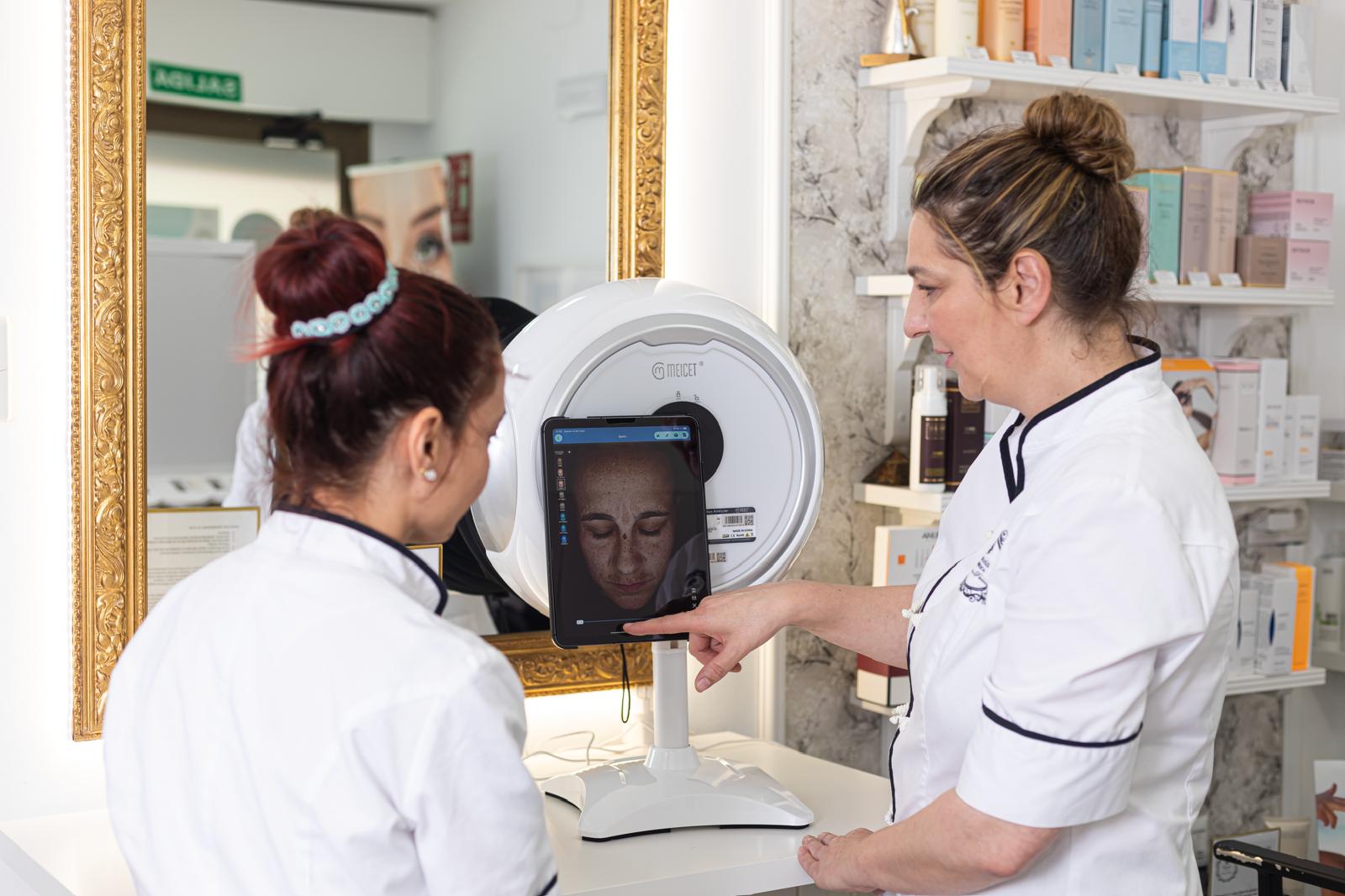
AI facial diagnosis with MEICET camera (€15)
The compulsory starting point. The MEICET camera precisely detects:
- Visible dark spots and subdermal spots (the ones that haven't surfaced yet but will over the next few months).
- Level of photo-ageing (wrinkles, elastosis, laxity).
- State of hydration layer by layer.
- State of the skin barrier (sensitivity, redness, permeability).
With that objective data Carmen puts together a personalised repair plan. Without a diagnosis we're treating "by ear", which is like buying shoes without trying them on.
Usual post-mountain repair treatments
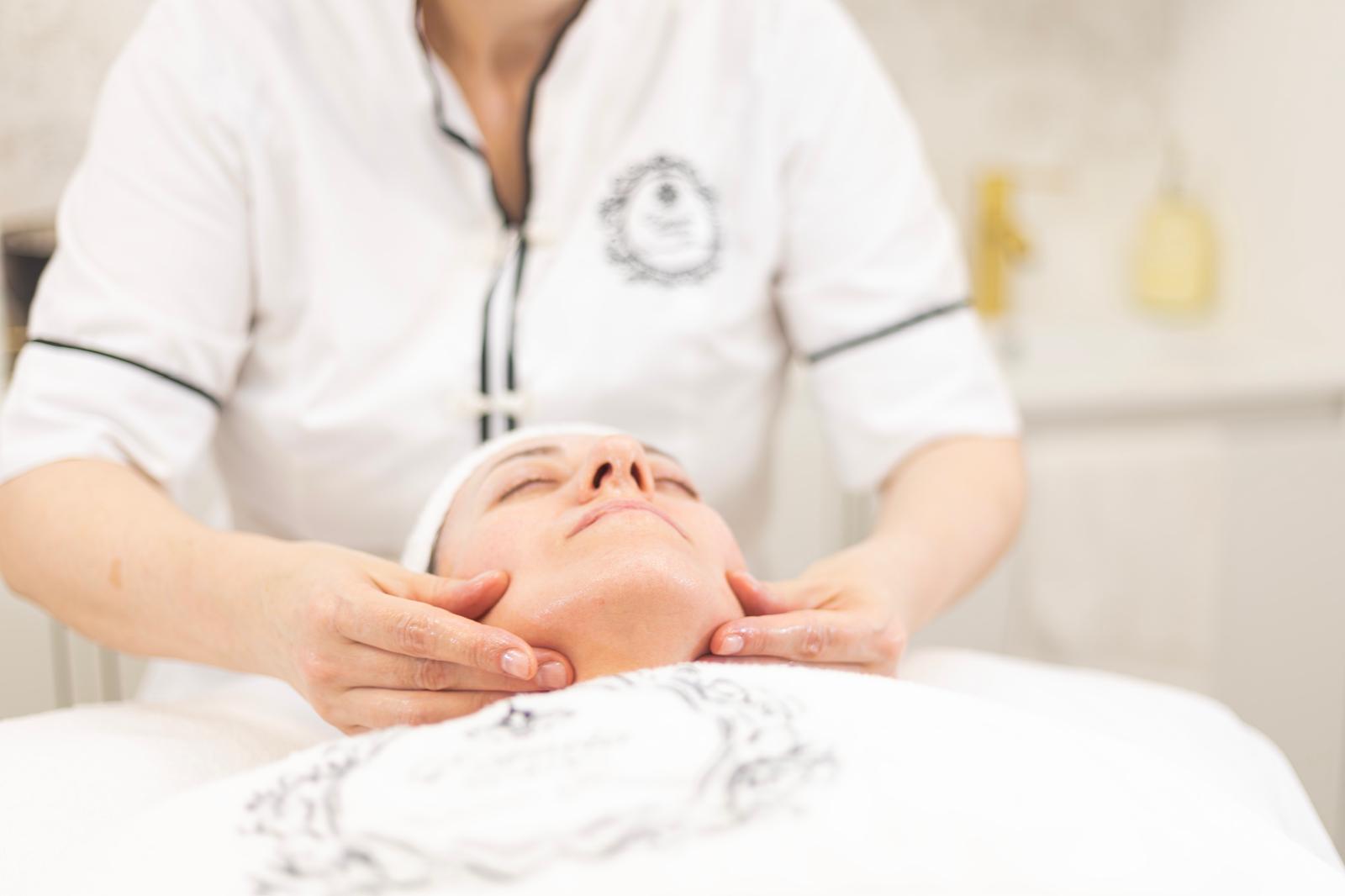
- Aquatherm facial (€85): intensive hydration for skin dehydrated by altitude and dry air.
- Deep-cleansing facial with oxygenation (€80): cleanses and oxygenates battered skin — the mandatory starting point.
- Vitamin C treatment (€85): a powerful antioxidant that helps repair accumulated cellular damage.
- Dark-spot treatment (price on assessment): Carmen sets the final price after diagnosis because it depends on the area and on the number/type of spots. It's often combined with depigmenting mesotherapy.
- Alissi Bronte Exosomes (€95) or Oda Exosomes (€120): advanced regenerative treatments for photo-aged skin or significant cellular damage.
My personal recommendation: don't wait to see the spot to act. The MEICET camera sees it weeks before you spot it in the mirror — acting early is always more effective and cheaper than acting late.
Recommendations by mountain trip profile
Not all mountain plans are the same. Match your protection to the activity:
Day hike below 1,500 m (low sierra, trails)
SPF 50, cap and water. Normal morning routine + reapplication every 2-3 hours if there's direct sun. Post-recovery level: normal routine + an extra hydrating mask that night.
4-6 h trek above 2,000 m (Peñalara, Pyrenees)
Mineral SPF 50+, UV category 3-4 sunglasses, wide-brim hat, lip balm. Reapplication every 2 h is mandatory. Full repair ritual on return. Consider an Aquatherm treatment in the treatment room within the next 2 weeks.
Multi-day route or trek in the high Pyrenees
All of the above + a very occlusive moisturiser at night + facial mist during the day. MEICET facial diagnosis on return is essential — the damage accumulated in 3-5 days of intense exposure deserves a serious assessment.
You live or spend the summer in a mountain village (Guadarrama, Sierra Norte)
Your skin is exposed for 2-3 months straight, not one day. The daily routine should include high SPF throughout summer and a monthly booking for a deep-cleansing facial + hydration. In September, a full MEICET assessment and a repair plan tailored to you.
Frequently asked questions about mountain skin care
How much does UV radiation rise in the mountains?
Around 10-12% more for every 1,000 metres of altitude. A hike in Peñalara (2,428 m) or La Pedriza can expose you to 25-30% more UV than central Madrid on the same day, even with the same cloud cover.
What SPF do I need for the mountains?
Mineral SPF 50+ (zinc oxide or titanium dioxide). Mineral filters are more resistant to sweat. Reapply every 2 h and after wiping off sweat. Add a lip balm with SPF: lips really suffer at altitude.
Why do I get so much dry mouth and cracked lips in the mountains?
Ambient humidity drops sharply with altitude and pulls water from the skin and mucous membranes. You can lose up to 40% more transepidermal water. Drink more water and use moisturisers with occlusives (squalane, shea butter) at night.
If dark spots have appeared after a mountain summer, what can I do?
We always start with a MEICET facial diagnosis (€15), which detects visible and subdermal spots. With that data Carmen decides whether the right treatment is a specific dark-spot protocol, depigmenting mesotherapy, exosomes or a combined plan. Prices vary by area and type of spots.
battered by the summer?
The MEICET facial diagnosis (€15) is the best starting point to know exactly what your skin needs after summer escapes. We detect visible and subdermal spots, assess photo-ageing and design a personalised repair plan. Without a serious diagnosis there is no effective treatment.