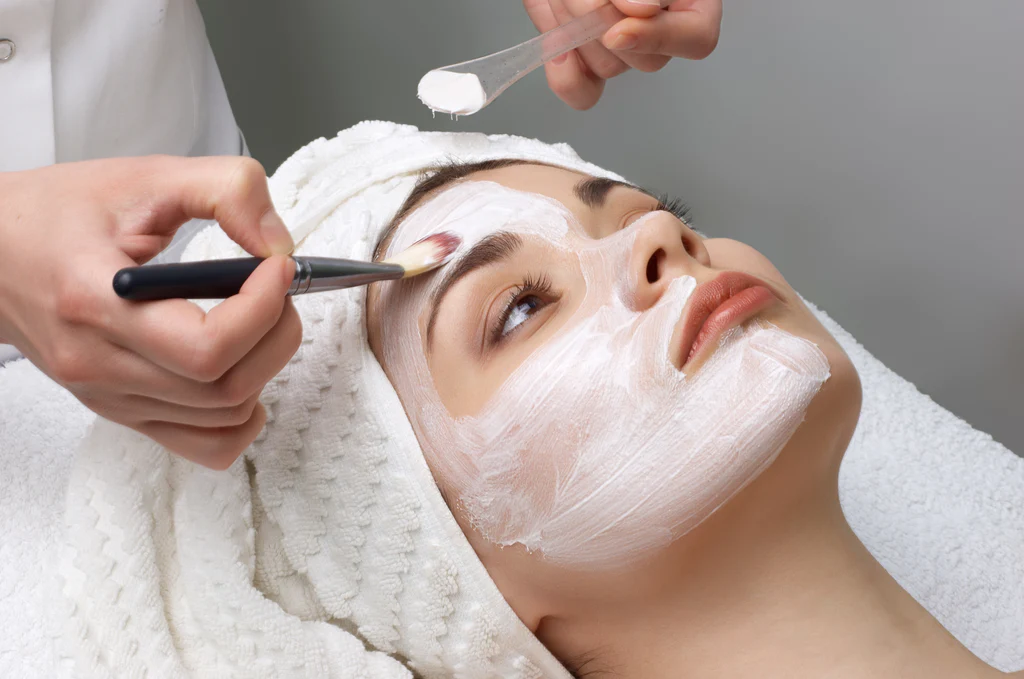
Most summer skincare articles talk about sun and beach. But many of us spend July and August in Madrid or nearby, between hot pavements, the metro and offices with the air conditioning set to 22°C. And the skin notices. It looks dull, it feels tight, shiny patches appear where they never did, and yet dry areas show up at the same time. It's not just the sun — it's an invisible urban trio that punishes the skin almost more than the beach does. Here's what's actually going on and how to neutralise it, at home and in the treatment room, from our salon 25 minutes from central Madrid.
The three invisible aggressors of the urban summer
When we say "sun and beach" we picture direct UV radiation — a well-known enemy with a clear fix (high SPF, shade, hat). But in the city the skin faces three other enemies that act at the same time, all day long, and almost nobody names them:
1. Persistent heat and silent dehydration
When ambient temperature stays above 30°C for days, transepidermal water loss can run up to 30% faster than in a mild climate. You don't feel it because you don't see moisture dripping — it's constant evaporation from the skin itself. You lose water and, with it, electrolytes and natural lipids. Result: dull skin, uneven texture, greater sensitivity.
2. Urban pollution (PM2.5 and ground-level ozone)
Madrid has recurring pollution episodes in summer — fine PM2.5 particles, nitrogen oxides and ozone. These particles are so tiny that they penetrate through the pores and settle in the dermis, where they generate free radicals. Free radicals are unstable molecules that damage collagen, elastin and cellular DNA — the very same process that prematurely ages the skin.
A concrete figure: long-term exposure to high PM2.5 levels is estimated to accelerate photo-ageing by 10–15% compared with rural areas. You live in the city and you can't change that — but you can protect your skin with topical antioxidants.
3. Air conditioning and sharp temperature swings
This is the least talked about, and probably the one that does the most damage. Stepping into 34°C outside, then into an office at 21°C, then the metro at 28°C, then back into the street... The skin's hydrolipidic barrier gets stressed with every sharp change. Air conditioning also dries things out further: it drops indoor humidity below 40%, and below that threshold the skin starts losing water to compensate.
In one sentence: urban summer combines sun + heat + pollution + dry air. Each one on its own the skin can manage. All four together, no.
Why your skin looks dull in August without any beach days
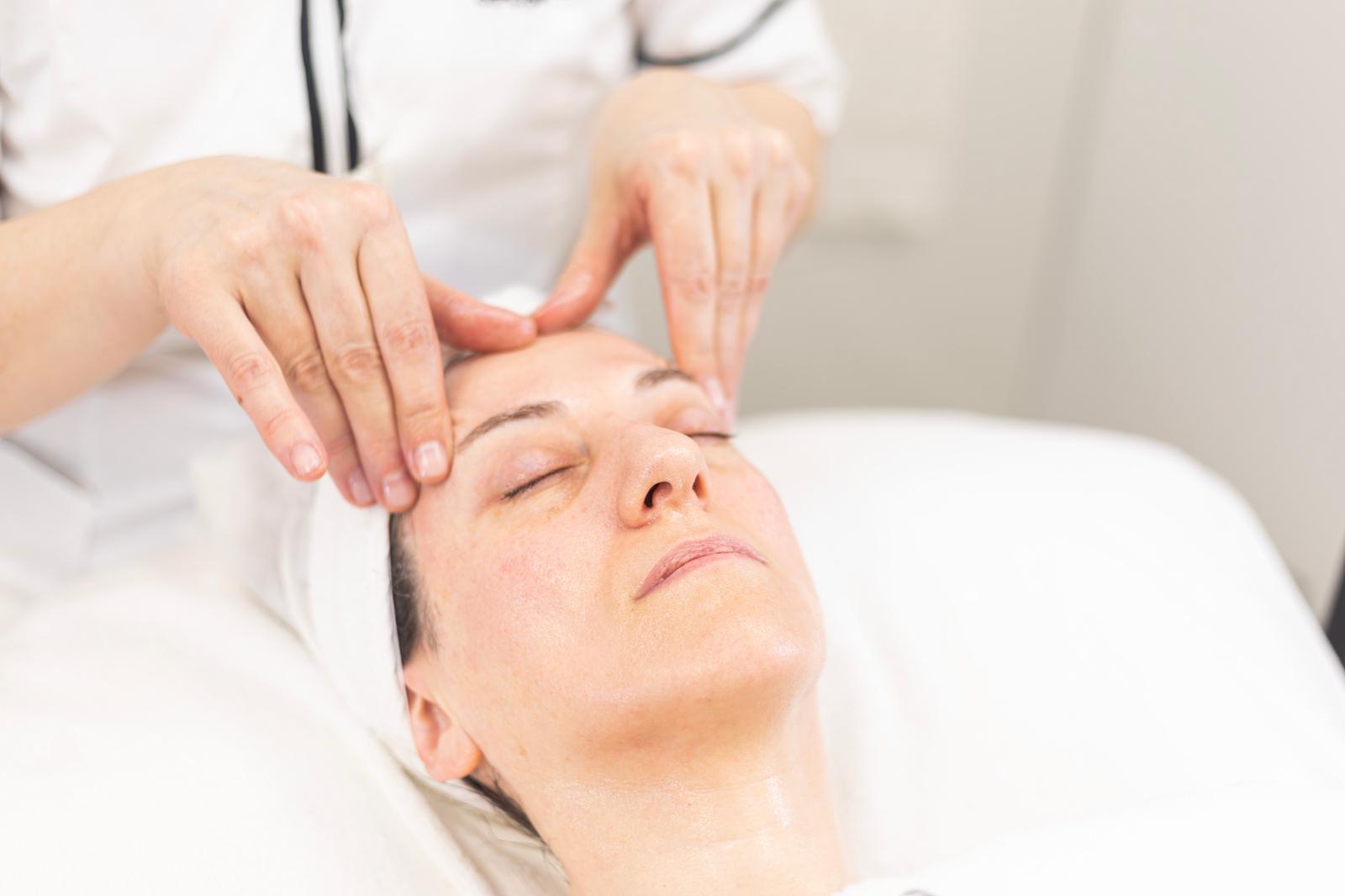
It's the most common complaint we hear in the treatment room in July and August: "Carmen, my skin is strange — dull, tight, and shiny at the same time. And I've barely been in the sun." It's not a contradiction, it's exactly what an urban summer produces.
What's happening: skin compensates for dehydration by producing more sebum (hence the shine), while the outer layer piles up poorly exfoliated dead cells (hence the dull look and uneven texture), while pollution oxidises the deeper layers (hence the dark spots starting to peek through). It's a self-feeding loop unless you break it.
A realistic urban summer routine: 4 steps you'll actually keep up
Forget 12-step Korean routines that neither of us thinks you'll follow in August at 38°C. These 4 steps are the effective minimum that really works in the city:
The concrete signs your skin needs the treatment room
Your home routine does 70% of the work. The remaining 30% comes from a professional facial when these symptoms appear — the ones we most often see in urban summer skin:
What we do in the treatment room for urban summer skin
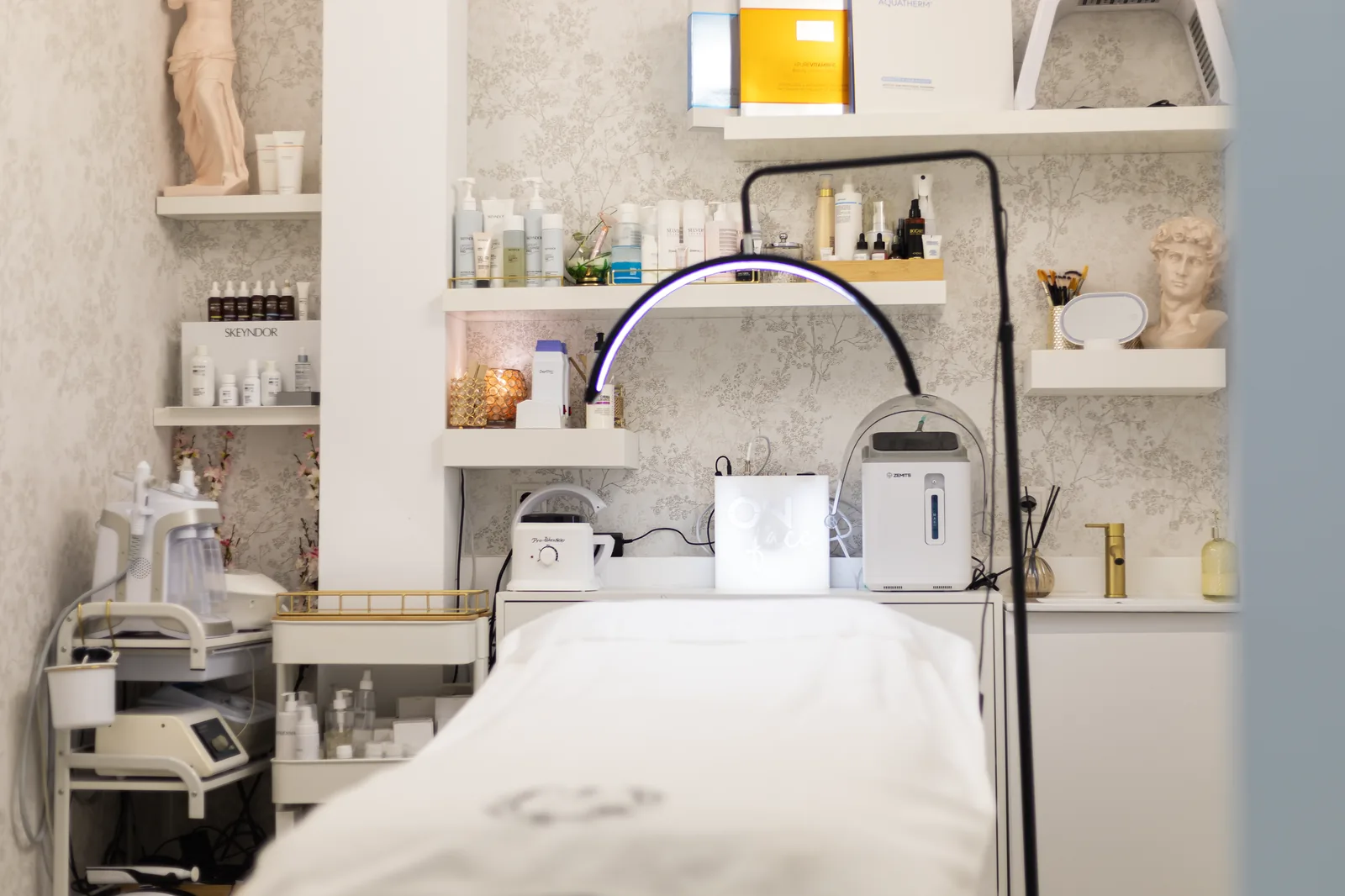
At Esencia Estética we have two core treatments that work particularly well for the "city summer" pattern, plus a few complementary ones we combine according to the diagnosis:
Deep-cleansing facial with oxygenation (€80)
Our core treatment for restoring skin battered by the city. It combines advanced technology (steam, diamond microdermabrasion, ultrasound, ultrasonic spatula and oxygen therapy) with professional skincare tailored to your skin type. It removes the layer of dead cells and accumulated pollution, oxygenates the dermis and brings back luminosity. Lasts 60–75 minutes and you see the result from the first session.
Hydradelux deep-cleansing facial (€120)
A step up. Hydrafacial + CO2 iPods + mesotherapy + radiofrequency + relaxing facial massage. It's a full sensory treatment: deep cleanses while also hydrating, oxygenating and stimulating collagen production. Perfect if, on top of the dull urban complexion, you also want to address the first signs of photo-ageing.
Add-ons depending on your case
- Vitamin C treatment (€85): a hit of in-room antioxidants. Ideal after a spell of heavy pollution or if your skin looks especially dull.
- O2 oxygen dome (€85): dermatological oxygen therapy that brings back near-instant luminosity. Very popular before an event after an intense working week.
- Aquatherm facial (€85): intensive hydration for skin dehydrated by air conditioning and persistent heat.
- AI facial diagnosis with MEICET camera (€15): if you don't know where to start, the diagnosis shows the real state of your skin (hydration, pores, subdermal spots, wrinkles, sensitivity) and we recommend the most suitable protocol.
My personal recommendation: if you've spent several months in the city with barely any break and you feel your skin has taken a beating, start with the MEICET diagnosis. With objective data we decide whether you need intensive hydration, antioxidants, exfoliation or a combination. We avoid spending on a treatment that wasn't the one your skin was asking for.
The golden hour rule after stepping in from the heat
A piece of advice we always give our clients that rarely appears in magazines: the first 60 minutes after you get in from the street are crucial. The skin is hot, dehydrated and pores are dilated. It's the perfect moment to hydrate because active ingredients penetrate better. Make use of that window:
- Wash your face with lukewarm water (not cold — closing pores with extreme contrast stresses the skin).
- Apply a soothing toner with niacinamide or panthenol.
- Hyaluronic acid serum on slightly damp skin.
- Wait 5 minutes, then a light moisturiser.
Do this 3–4 times a week in August and you'll see the difference in September.
Frequently asked questions about urban summer skin care
Why does my skin look duller in summer even if I hardly see the sun?
Because urban skin suffers three parallel aggressors: persistent heat that dehydrates, pollution that oxidises and air conditioning that dries out. Together they create a cycle of dehydration + dead-cell build-up + cellular oxidation that translates into a dull complexion.
Do I really need sun protection in the city?
Yes, and with SPF 50+. UVA radiation passes through glass, buildings and shade, and it is the main cause of photo-ageing and dark spots. In urban summer, this is the single most important step of your morning routine.
How often should I book a professional deep-cleansing facial in summer?
With high temperatures and urban pollution, every 6–8 weeks. It removes impurities that home cleansing cannot reach, oxygenates the skin and reactivates microcirculation. We offer a deep-cleansing facial with oxygenation (€80) or Hydradelux (€120) for more demanding skin.
Should I change my skincare in summer?
Yes — texture matters. Watery serums with hydrating actives and antioxidants + gel or gel-cream moisturisers. The dense winter creams are too occlusive and make dull, sweaty skin worse.
summer in the city?
Tell us what you're feeling on your skin and we'll suggest the treatment that will suit you best. If you're not sure where to start, the MEICET facial diagnosis (€15) is the ideal starting point — with real data we see exactly what your skin needs right now, and avoid spending on the wrong thing. No obligation.